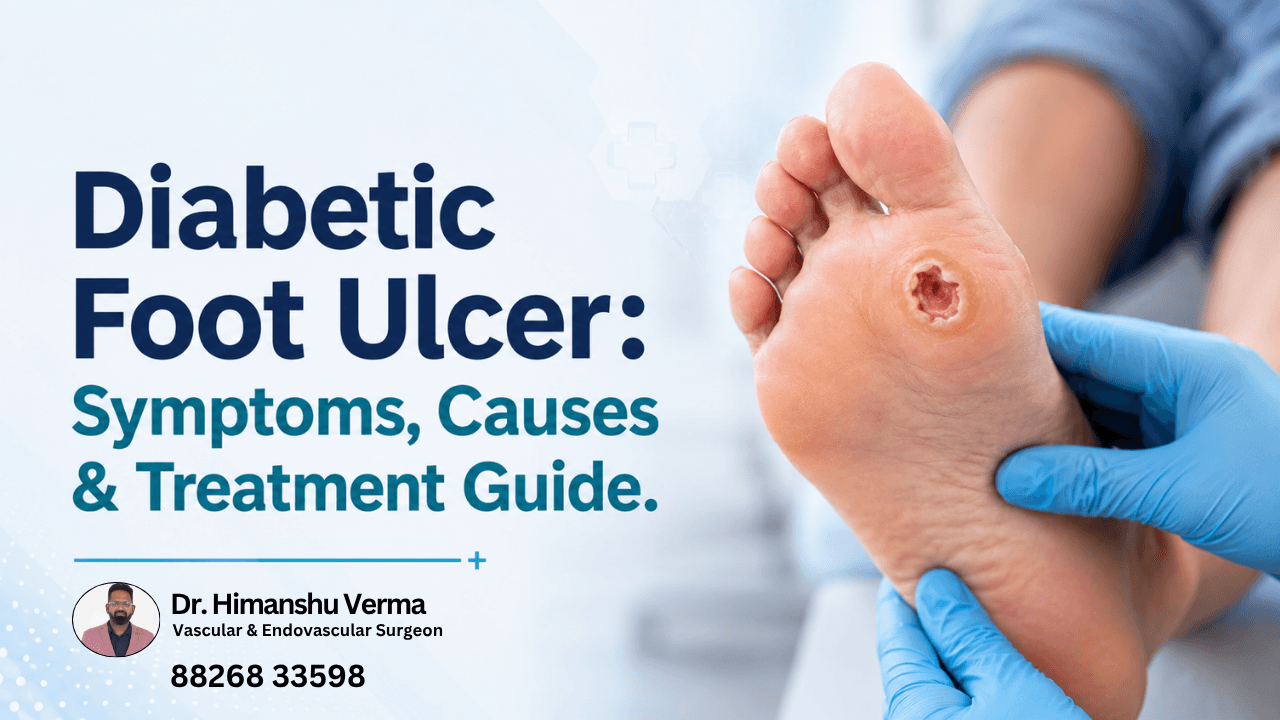
Living with diabetes comes with a long list of things to keep track of: blood sugar levels, diet, medicines, and checkups. In the middle of all that, the feet often get ignored. And that is exactly where the problem starts.
A diabetic foot ulcer is one of the most serious complications that can develop in a person with diabetes. It looks like a wound or a sore on the foot, and unlike a regular cut, it does not heal on its own. In fact, without proper care, it can quietly grow deeper, get infected, and in the worst cases, lead to amputation.
The good news is that most diabetic foot ulcers are preventable. And those that do develop can be treated successfully if they are caught and managed in time. This guide is written for you, whether you are managing diabetes yourself, caring for a family member, or simply trying to understand what this condition is and why it matters.
What Is a Diabetic Foot Ulcer?
A diabetic foot ulcer is an open sore or wound that develops on the foot of a person with diabetes. It most commonly appears on the bottom of the foot, under the toes, or on the heel. It can start as something as small as a blister or a cracked patch of dry skin. Because of how diabetes affects the body, what would normally heal in a few days for a healthy person can become a wound that stays open for weeks or months.
This is not a rare problem. Studies suggest that around 15 to 25 percent of people with diabetes will develop a foot ulcer at some point in their lives. It is also one of the leading reasons people with diabetes end up needing amputation. But here is the important part: most of these amputations are avoidable if the wound is identified early and treated correctly.
Why Does Diabetes Make Foot Wounds So Dangerous?
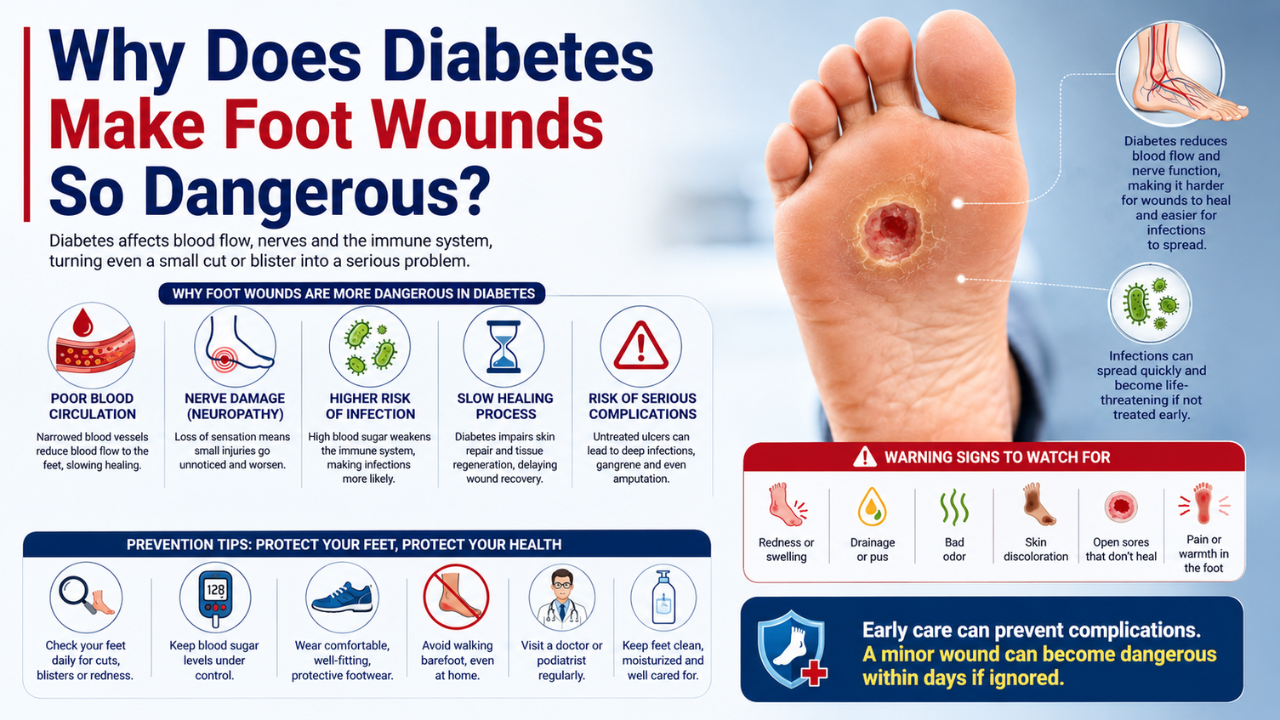
To understand diabetic foot ulcers, you first need to understand what diabetes does to the body over time. Two things happen that make the feet particularly vulnerable.
The first is nerve damage. When blood sugar stays high for long periods, it slowly damages the nerves in the feet and legs. This means you may stop feeling pain from a cut, heat from a hot surface, or pressure from a shoe rubbing a wound. Because that warning signal is gone, many people do not realise they have a wound until it has already become serious.
The second is poor blood flow. Diabetes damages the blood vessels that carry blood to the feet. Without enough blood reaching the area, the tissue cannot repair itself, immune cells cannot fight infection effectively, and healing slows down dramatically.
Together, these two problems create the perfect conditions for an early-stage diabetic foot ulcer to develop quietly and grow into something far more difficult to treat.
Symptoms of a Diabetic Foot Ulcer
One of the most challenging things about diabetic foot ulcers is that they do not always hurt. In fact, the nerve damage that comes with diabetes means many people feel nothing at all in the area of the wound. This is why looking at your feet every single day matters so much.
Here are the signs to watch for:
● A sore, cut, or break in the skin on the foot that has not healed within two weeks
● Redness or warmth around a wound, even if it is small
● Swelling in the foot or ankle near the affected area
● Fluid, pus, or any unusual discharge coming from a wound
● A foul smell coming from the wound or from inside your shoe
● Skin that looks dark, brown, or black near a sore (this is a warning sign that tissue may be dying)
● Dry, cracked skin, especially around the heels, that has started to open up
● A blister or corn that has broken through the skin underneath
Beyond the wound itself, there are also symptoms that may appear elsewhere. Burning, tingling, or numbness in the feet points to nerve damage. Cramping pain in the calves when walking, which eases when you stop and rest, suggests poor blood flow in the leg arteries. Cold feet, even in warm weather, and skin that looks pale or bluish are also signs that circulation is not as it should be.
What Causes a Diabetic Foot Ulcer?
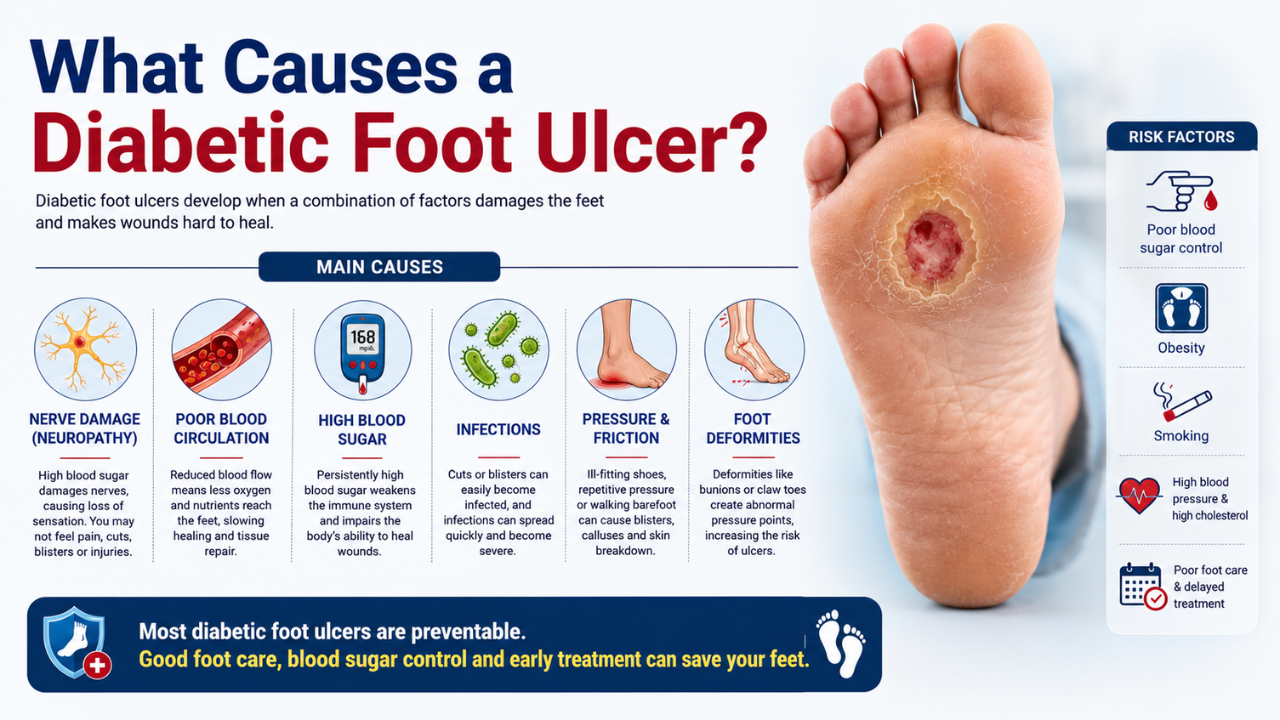
Diabetic foot ulcers do not happen randomly. They develop because of a combination of conditions that diabetes creates in the body, combined with everyday triggers that most people would not even think twice about.
● Nerve damage removes the warning system. In a healthy person, pain is what tells you something is wrong. A tight shoe causes pain, so you take it off. A small stone in your sock causes discomfort, so you stop and remove it. A blister hurts, so you treat it. When nerve damage takes away that pain signal, none of these protective responses happens. A person with diabetes may walk all day on a wound without ever knowing it is there.
● Poor circulation removes the healing system. Even when a wound does form, the body needs blood to heal it. Immune cells travel through the blood to fight bacteria. Nutrients and oxygen travel through the blood to rebuild tissue. When the blood vessels supplying the feet are narrowed or damaged, this whole process slows down or fails. The wound stays open, bacteria move in, and infection spreads.
● High blood sugar makes everything worse. Uncontrolled blood sugar affects the function of immune cells, making it harder for the body to fight off infection. It also affects collagen, the protein the body uses to rebuild damaged skin and tissue. High sugar essentially disrupts every part of the wound-healing process at once.
Beyond these underlying causes, certain daily habits and situations act as triggers. Poorly fitting footwear is one of the most common. Shoes that are too tight, too loose, or have seams in the wrong place can create pressure points or friction that break the skin. Walking barefoot, even at home, exposes the feet to cuts, scrapes, and surface injuries. Trimming nails too aggressively or cutting into the corners can create small wounds. A corn or callus that is ignored can break open underneath the hardened skin.
How Is a Diabetic Foot Ulcer Diagnosed?
When you visit a specialist with a wound that is not healing, the examination will go beyond just looking at the sore itself. A thorough assessment involves understanding the wound, the nerve function, and the blood supply to the foot.
The doctor will examine the wound carefully, checking its size, depth, and whether there are signs of infection. They will check for nerve sensation in the feet using simple tests. They will assess blood flow by checking the pulses in the feet and ankles. In many cases, a Doppler ultrasound or an ankle-brachial index test is done to measure how well blood is flowing to the foot. If infection is suspected to have spread to the bone, an X-ray or MRI may be needed.
This complete picture matters because the treatment plan for someone with a wound but good blood flow is very different from the plan for someone whose wound is not healing because of a blocked artery. Treating only the wound without addressing the circulation problem is one of the most common reasons diabetic foot ulcers fail to heal despite weeks of care.
Treatment of Diabetic Foot Ulcer
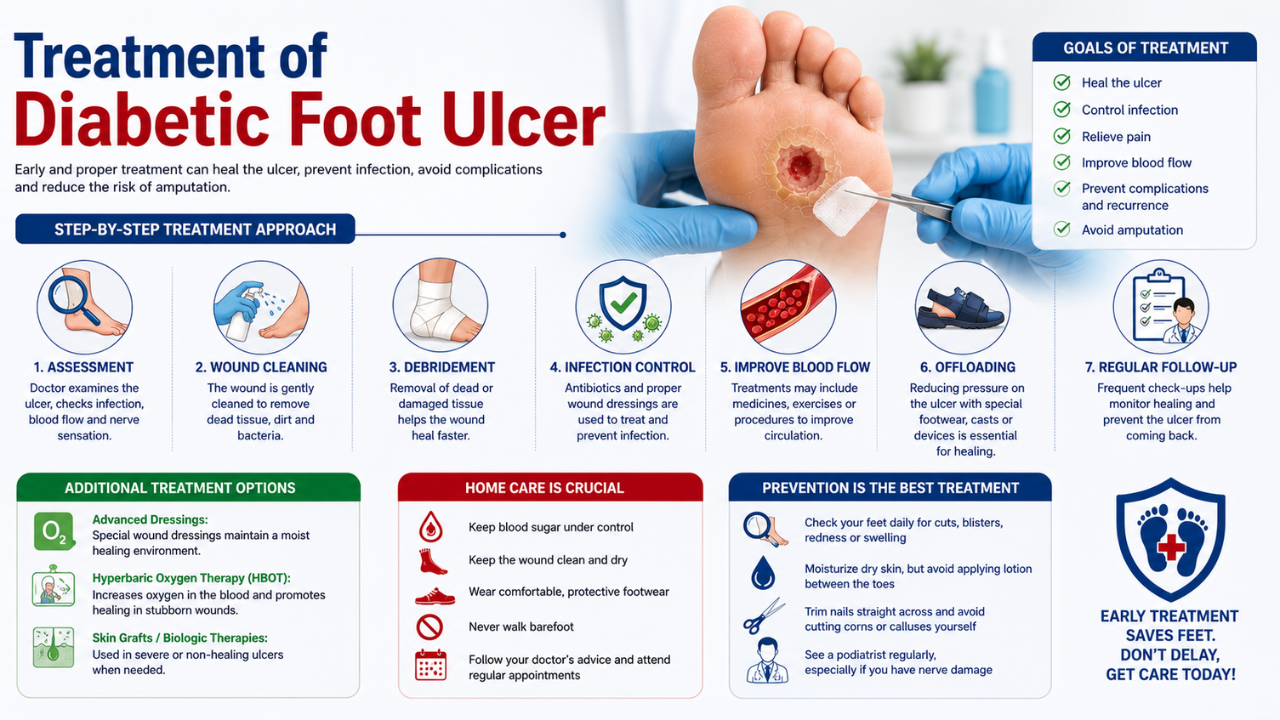
Treatment for a diabetic foot ulcer is not one-size-fits-all. It depends on the size and depth of the wound, whether infection is present, and how well blood is reaching the foot. What follows is a clear explanation of the different parts of treatment and what each one does.
● Wound cleaning and dressing is the foundation. The wound needs to be cleaned regularly and covered with the right type of medical dressing. Different dressings are used for different types of wounds. Some keep the wound moist, which speeds up healing. Some absorb extra fluid. Some have antimicrobial properties to prevent infection. This is not something that can be done with cotton wool and a bandage from a pharmacy. The dressing choice is a clinical decision made by a wound care specialist.
● Removing dead tissue is a step called debridement. When a wound has been open for a while, some of the tissue around and inside it may be dead or damaged. This dead tissue blocks new healthy tissue from growing and provides a hiding place for bacteria. Removing it carefully creates a clean base for the wound to start healing.
● Taking pressure off the wound is called offloading, and it is one of the most critical yet most overlooked parts of treatment. Every time you step on the wound, you push bacteria deeper in, disrupt any new tissue that is forming, and delay healing. Depending on where the wound is, a specialist may recommend a total contact cast, a special boot, padded insoles, or diabetic footwear that redirects pressure away from the wound.
● Controlling blood sugar is non-negotiable. Without it, nothing else will work properly. Your diabetes medicines may need to be adjusted during this period. Regular monitoring of blood sugar at home becomes even more important when you have an active wound.
● Treating infection requires antibiotics when the wound shows signs of spreading infection, like increasing redness, warmth, swelling, pus, or fever. In cases where the infection has reached the bone, a condition called osteomyelitis, more aggressive treatment, including surgery, may be needed to remove the infected bone.
● Restoring blood flow is where vascular surgery becomes essential. If a narrowed or blocked artery is preventing blood from reaching the foot, no amount of wound care will allow the ulcer to close. The blood supply must be restored first. This can be done through an angioplasty, where a small balloon is used to open a narrowed artery, or through bypass surgery, where a new route for blood is created around the blocked vessel. These procedures can often be done with minimal incisions, and they make a transformative difference in wound healing.
● Advanced wound therapies like negative pressure wound therapy may be used for deep or complex wounds. This involves a special device that applies gentle suction to the wound, drawing out fluid, reducing swelling, and encouraging new tissue to grow.
Living with Diabetes: How to Protect Your Feet Every Day
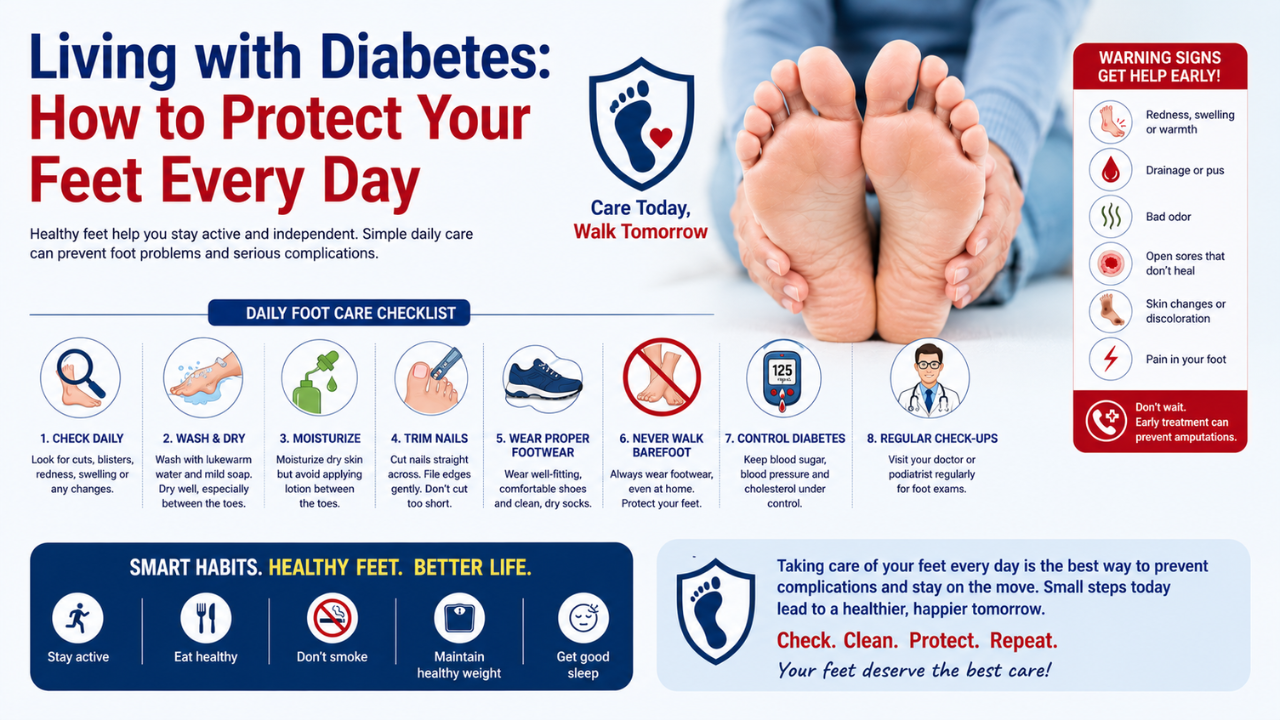
The best treatment for a diabetic foot ulcer is making sure one never develops in the first place. These daily habits make a real difference.
● Check your feet every single day. Look at the soles, the heels, between the toes, and around the toenails. Use a mirror if you cannot bend easily enough to see the bottom of your feet. You are looking for any change: a new red spot, a crack, a blister, a sore, or anything that was not there yesterday.
● Wash your feet with lukewarm water, not hot water. Nerve damage can make it hard to judge temperature, so always test the water with your elbow or a thermometer first. Dry your feet gently and completely, paying attention to between the toes, as moisture trapped there can lead to skin breakdown and fungal infections.
● Moisturise your feet every day with a good lotion or cream, but keep it away from between the toes. Apply it to the soles and heels where the skin tends to get dry and crack.
● Wear proper footwear every time you leave bed, including when you walk around the house. Diabetic shoes and slippers are designed to reduce pressure on vulnerable areas of the foot. Before putting any shoe on, run your hand inside it to check for stones, stitching that has come loose, or anything that could rub against your foot.
● Keep your toenails trimmed straight across and at a moderate length. Avoid cutting into the corners. If this is difficult to do safely, ask a podiatrist or trained healthcare professional to help.
● Do not smoke. Smoking narrows blood vessels and makes poor circulation in the feet significantly worse. For a person with diabetes who already has compromised blood flow, smoking is one of the most harmful things they can do for their feet.
● Keep your blood sugar within the range your doctor has advised. Get your HbA1c checked regularly. Have your feet examined at every doctor's visit, even when there is no visible problem.
When Should You See a Doctor?
Do not wait to see if a wound heals on its own when you have diabetes. See a specialist promptly if you notice any wound, sore, or break in the skin on your foot that has not healed within 7 to 10 days. Also seek care if you notice redness or swelling that is spreading, pus or an unusual smell from a wound, a darkening of the skin around a sore, fever along with a foot wound, or increasing numbness or coldness in the feet.
A vascular specialist is the right doctor to consult for a diabetic foot ulcer. They can assess both the wound and the blood supply, create a comprehensive treatment plan, and, when needed, perform procedures to restore circulation and save the limb.
Book a Consultation with Dr. Himanshu Verma
If you or someone in your family has diabetes and is dealing with a wound that is not healing, do not delay care. Dr. Himanshu Verma is a vascular and endovascular surgeon at Fortis Memorial Research Centre, Gurugram, with extensive experience in treating diabetic foot ulcers, restoring blood flow to the feet, and helping patients avoid amputation.
Patients from Gurgaon, Delhi NCR, Noida, Faridabad, and across Haryana consult Dr. Verma for advanced, limb-saving care. His approach focuses on finding and treating the root cause, not just the wound on the surface.
Call: +91 88268 33598
Email: varenyamvascular@gmail.com
Visit: Fortis Memorial Research Centre, Opposite HUDA City Centre, Sector 44, Gurugram, Haryana 122003
Early treatment leads to better outcomes. Book your consultation today.