Vascular & Endovascular Surgeon · Gurgaon
Peripheral Artery Disease Treatment in Gurgaon
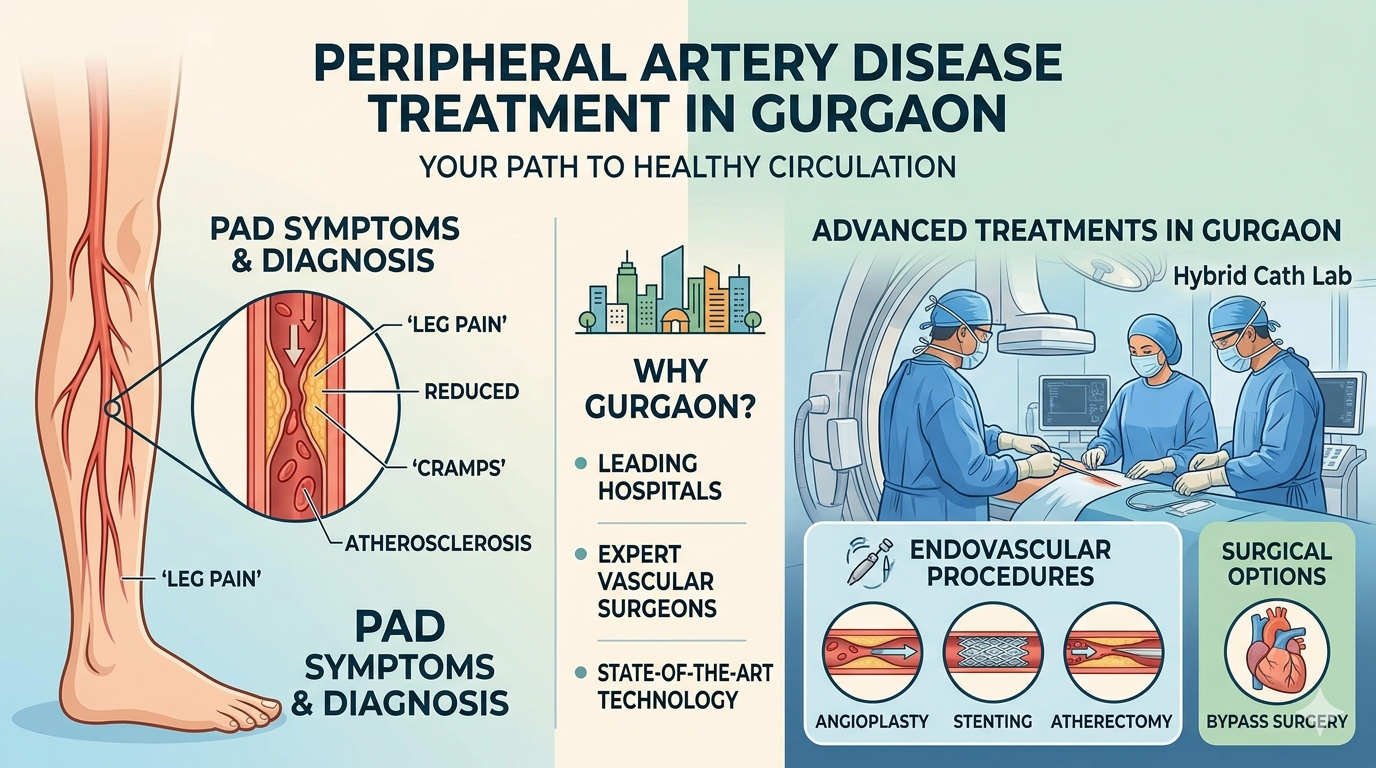
Leg pain while walking, cold feet, numbness or wounds that take longer to heal may indicate a problem with blood circulation. Peripheral Artery Disease (PAD) develops when arteries supplying blood to the legs become narrowed or blocked, commonly due to plaque buildup.
Early assessment can help identify the severity of the condition and guide appropriate care. Dr. Himanshu Verma, Vascular and Endovascular Surgeon at Fortis Memorial Research Centre, Gurugram, evaluates patients with suspected PAD and discusses suitable treatment options based on their symptoms, test results and overall health.
14 Procedures
Treatment Options
5-Step
Diagnosis Process
Minimally Invasive
Preferred Approach
Who Is a Peripheral Artery Disease Specialist?
A Peripheral Artery Disease specialist assesses problems affecting blood flow through the arteries, particularly those supplying the legs and feet. A vascular surgeon can evaluate the location and severity of an arterial blockage and explain whether medical management, an endovascular procedure or surgery may be appropriate.
Dr. Himanshu Verma is a Vascular and Endovascular Surgeon practising at Fortis Memorial Research Centre, Gurugram. Patients with suspected PAD can undergo an assessment of their symptoms, circulation and relevant risk factors to help determine the appropriate care plan.
Why Early Consultation Matters
Recognise the Signs
What Are Peripheral Artery Disease Symptoms?
Peripheral Artery Disease may develop gradually, and some people notice symptoms only during physical activity. Common signs include:
- Leg pain while walking: Cramping or aching in the calf, thigh or buttock that improves with rest.
- Cold feet or lower legs: One foot may feel colder than the other.
- Numbness or weakness: An unusual sensation in the legs or feet.
- Slow-healing wounds: Cuts or sores on the toes and feet that take longer than expected to heal.
- Skin and nail changes: Changes in skin colour, reduced hair growth or slower nail growth.
- Reduced foot pulses: A clinician may find weaker pulses in the feet during examination.
Symptoms can have causes other than PAD, so an examination is important for an accurate diagnosis.
Notice sudden severe leg pain, a cold or pale foot, or a sudden loss of sensation or movement? Seek emergency medical care immediately.
Know the Facts
What Causes Peripheral Artery Disease?
Peripheral Artery Disease usually develops when fatty deposits called plaque build up inside the arteries. This process, known as atherosclerosis, can narrow the blood vessels and reduce the amount of oxygen-rich blood reaching the legs and feet.
Common Risk Factors for PAD
Can Peripheral Artery Disease Be Prevented?
Not every case can be prevented, but managing risk factors may reduce the chance of progression. Depending on your health, your doctor may recommend stopping smoking, regular physical activity, a heart-healthy diet and appropriate management of cholesterol, blood pressure and diabetes.
If you have diabetes, smoke or have persistent leg symptoms, ask your healthcare professional whether a PAD assessment is appropriate.
Leg Pain While Walking? Get Your Circulation Checked.
Recurring leg pain, cold feet or a wound that is slow to heal should not be ignored. A clinical assessment can help determine whether reduced arterial blood flow may be contributing to your symptoms.
Our Diagnostic Process
How Is Peripheral Artery Disease Diagnosed?
Diagnosing PAD involves reviewing symptoms, checking circulation and selecting suitable tests. The investigations needed can vary according to the patient's condition and the suspected location of the blockage.
Medical History & Physical Examination
The doctor reviews symptoms, smoking history, diabetes, cholesterol and other cardiovascular risk factors. The examination may include checking pulses, skin colour, temperature and any wounds on the legs or feet.
Ankle-Brachial Index (ABI)
The ABI test compares blood pressure measured at the ankle with blood pressure measured at the arm. It is a non-invasive test that can help identify reduced blood flow to the legs. Results are interpreted in the context of the patient's symptoms and clinical findings.
Doppler Ultrasound
Doppler ultrasound uses sound waves to assess blood flow through the arteries. It can help identify areas where circulation is reduced and provide information about the location and severity of a blockage.
CT Angiography or MR Angiography
When more detailed images are needed, CT or MR angiography may be used to examine the blood vessels. These images can help the treating team plan further management or an intervention when indicated.
Advanced Procedures
Treatment Options for Peripheral Artery Disease
Every procedure is performed under the guidance of an experienced Peripheral Artery Disease Specialist to ensure safety and precision. We provide advanced Peripheral Artery Disease treatment in Gurgaon tailored to each patient, including:
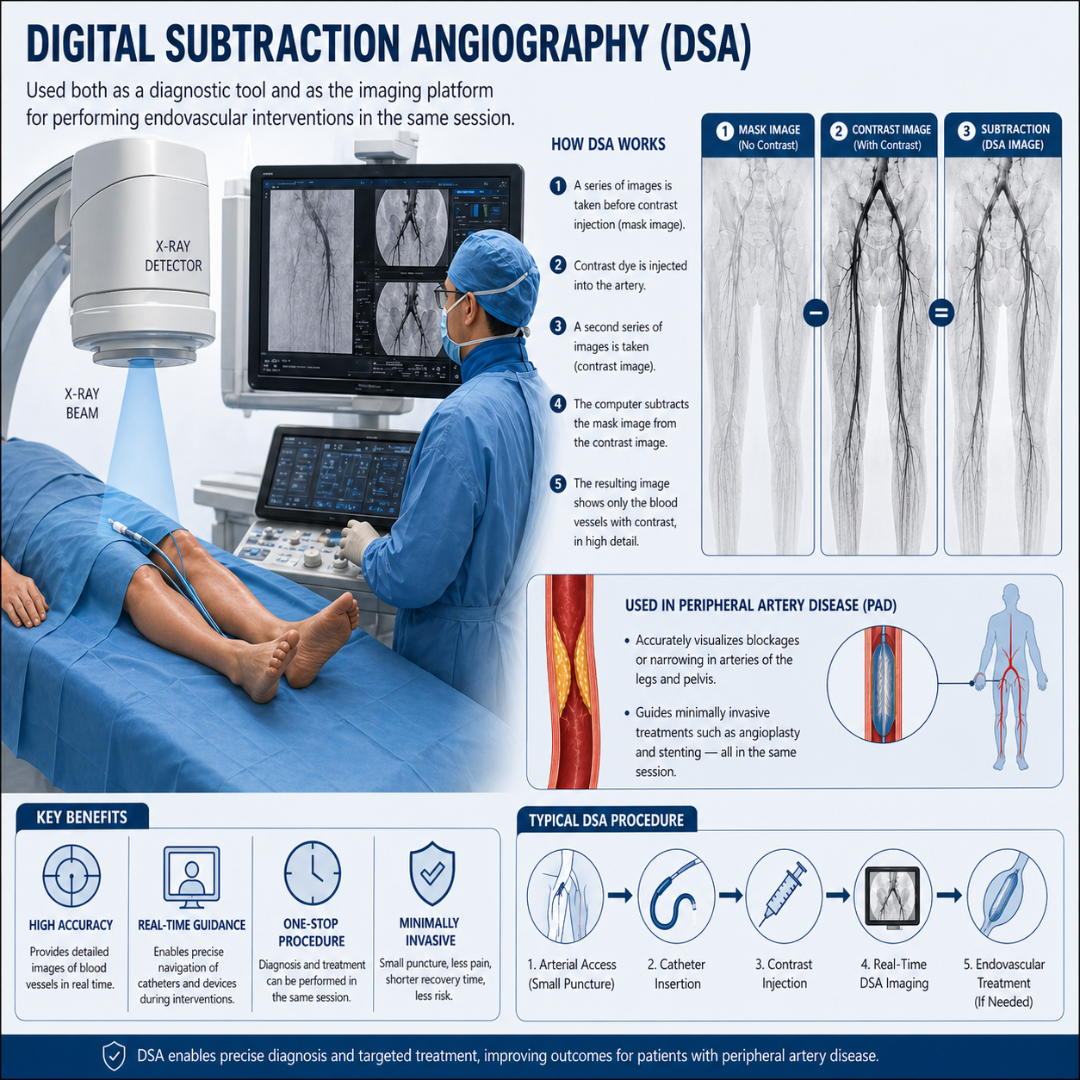
Digital Subtraction Angiography (DSA)
Digital Subtraction Angiography (DSA) is an imaging technique used to visualise blood vessels and identify areas of narrowing or blockage. It can help the vascular specialist assess arterial circulation and plan or guide appropriate treatment when required.
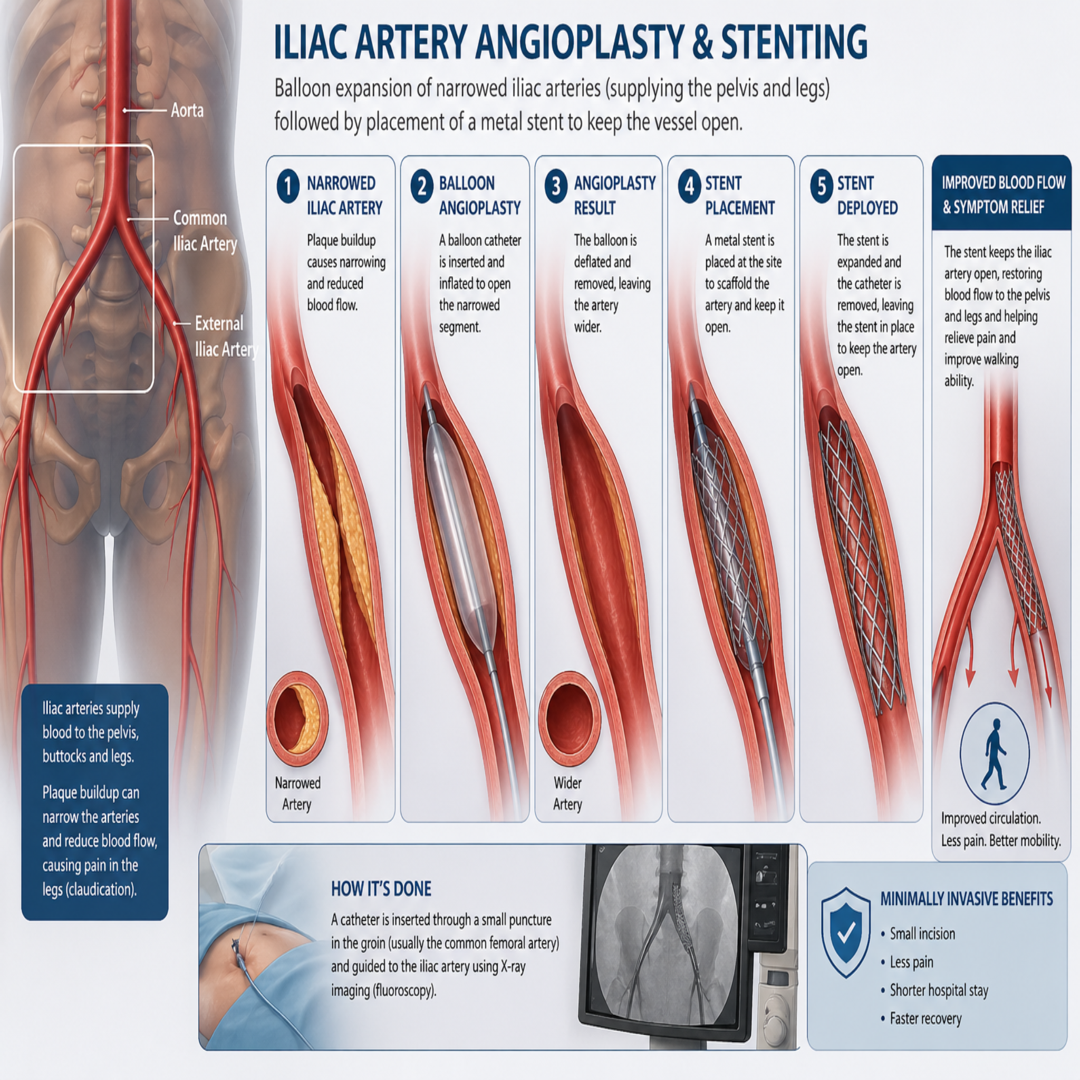
Iliac Artery Angioplasty & Stenting
Balloon expansion of narrowed iliac arteries (supplying the pelvis and legs) followed by placement of a metal stent to keep the vessel open.
Femoral Artery Angioplasty
Femoral artery angioplasty is a minimally invasive procedure used to improve blood flow through a narrowed section of the femoral artery. A balloon catheter is guided to the affected area and inflated to widen the artery. The treatment approach depends on the location and severity of the blockage and the patient's condition.
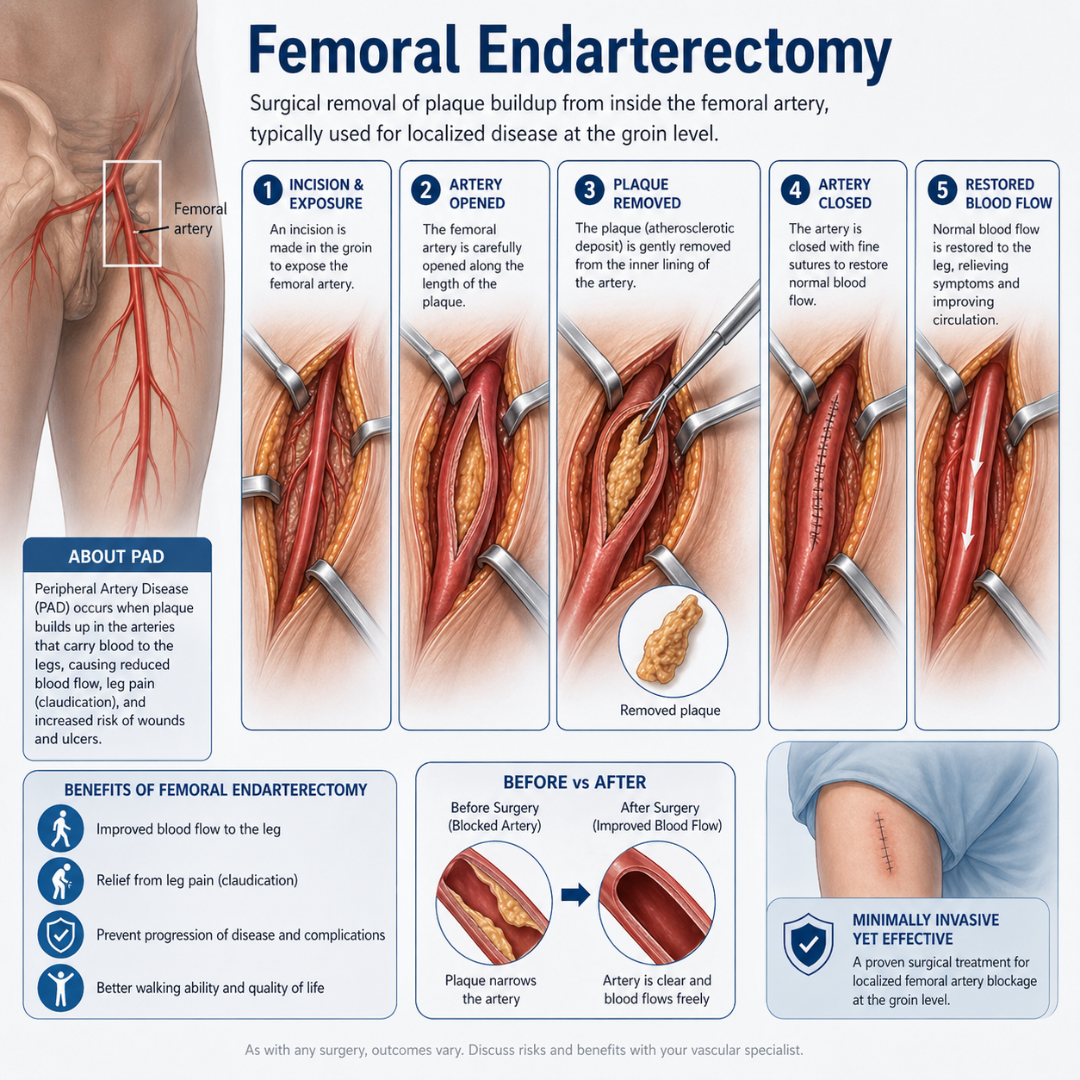
Femoral Endarterectomy
Surgical removal of plaque buildup from inside the femoral artery, typically used for localized disease at the groin level.
Superficial Femoral Artery (SFA) Angioplasty
Balloon-based opening of blockages in the SFA, one of the most commonly affected arteries in PAD patients.
SFA Drug-Eluting Balloon Angioplasty
An advanced form of SFA angioplasty using a balloon coated with anti-restenosis medication, which is released into the artery wall to reduce the risk of re-narrowing after treatment.
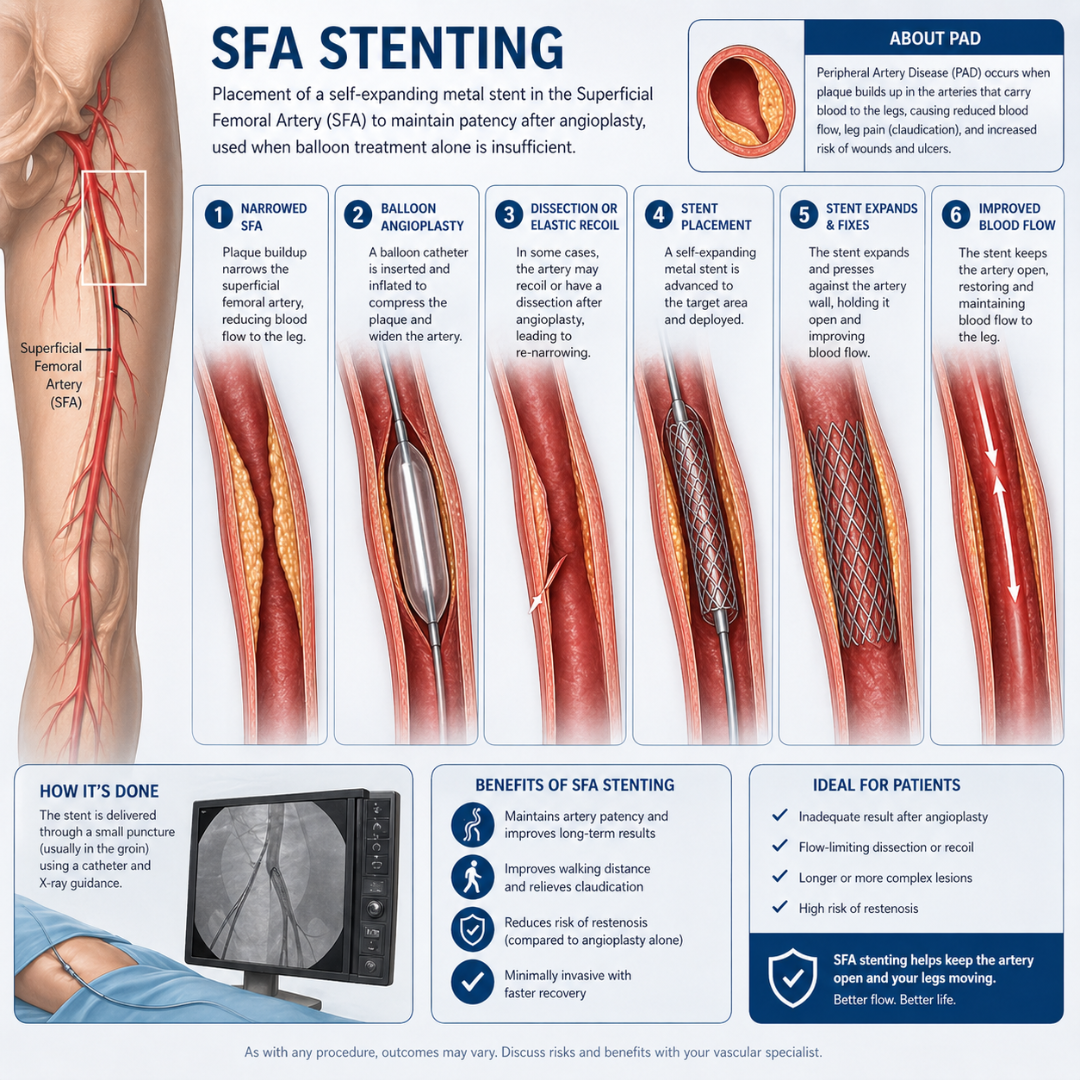
SFA Stenting
Placement of a self-expanding metal stent in the SFA to maintain patency after angioplasty, used when balloon treatment alone is insufficient.
Below-Knee (BTK / TBL) Angioplasty
Technically demanding endovascular treatment of blocked arteries in the calf and foot, critical for limb salvage in patients with diabetic foot disease or critical limb ischemia.
Femoro-Popliteal Bypass
A surgical bypass using either the patient's own vein or a synthetic graft to reroute blood around a blocked segment of the femoral or popliteal artery.
Femoro-Tibial Bypass
Bypass surgery extending from the femoral artery to the tibial vessels in the lower leg, typically reserved for extensive multi-level disease where endovascular options are unsuitable.
Tibial/Plantar Vessel Angioplasty
Tibial and plantar vessel angioplasty may be considered for selected patients with reduced blood flow in the arteries supplying the lower leg and foot. A catheter-based balloon procedure is used to widen suitable narrowed areas and improve circulation. Treatment decisions depend on the arterial anatomy, foot condition and overall health of the patient.
Intravascular Lithotripsy (IVL)
Intravascular Lithotripsy (IVL) is a specialised endovascular technique that uses sonic pressure waves to modify calcium within selected hardened arterial blockages. It may help prepare heavily calcified arteries for balloon angioplasty and other appropriate treatments. Its suitability depends on the location and characteristics of the blockage.
Intravascular Ultrasound (IVUS) Guidance
Intravascular Ultrasound (IVUS) uses a specialised ultrasound catheter to provide detailed images from inside the artery. It helps the treating specialist assess the vessel, understand the blockage and guide selected endovascular procedures. Its use depends on the patient's condition and treatment requirements.
Embolectomy for Acute Limb Ischemia
Emergency surgical removal of a blood clot that has suddenly blocked an artery, causing acute loss of blood supply to the limb. This is a limb- and life-saving procedure requiring immediate intervention.
Our goal is to restore blood flow, relieve symptoms, and improve your quality of life. Every patient deserves care from an experienced Peripheral Artery Disease Specialist using the most advanced techniques available.
Start your treatment journey now. Speak with our specialists for the best Peripheral Artery Disease treatment in Gurgaon tailored to your condition.
Not Sure Which Treatment Is Right for You?
The right approach depends on your symptoms, circulation tests and the location of the blockage. A vascular assessment can help you understand the available options and the next steps in your care.
Lifestyle and Prevention
Lifestyle measures are an important part of managing Peripheral Artery Disease. They can support circulation and cardiovascular health, although the right plan depends on your symptoms and medical history.
- Stop smoking: Ask for professional support if you need help quitting tobacco.
- Follow an appropriate exercise plan: Walking programmes may improve symptoms for suitable patients. Your doctor can advise whether supervised exercise is appropriate.
- Manage cholesterol: Follow your prescribed treatment plan and attend recommended reviews.
- Control blood pressure and diabetes: Individual targets should be set with your treating healthcare professional.
- Choose a heart-healthy diet: A balanced eating pattern can support the management of cardiovascular risk factors.
- Check your feet regularly: Look for cuts, blisters, colour changes or wounds, particularly if you have diabetes or reduced sensation.
- Attend follow-up appointments: Monitoring helps your care team review symptoms, risk factors and response to treatment.
Do not start, stop or change prescribed medication without consulting your healthcare professional.
Why Consult Dr. Himanshu Verma for Peripheral Artery Disease?
Choosing a treatment plan for PAD begins with understanding how the condition affects your circulation and daily activities. Dr. Himanshu Verma is a Vascular and Endovascular Surgeon practising at Fortis Memorial Research Centre, Gurugram.
Patients can discuss their symptoms, investigation results and potential treatment options as part of an individual assessment.
What to Expect During Your Care
Review of symptoms, medical history and circulation concerns.
Further tests may be recommended when needed to understand the arterial blockage.
Suitable options are explained according to the patient's condition.
Monitoring and risk-factor management may form part of the ongoing care plan.
Your treatment recommendation will depend on your individual medical needs and assessment.
Patient Stories
What Our Patients Say
"I had been ignoring cramps in my calves for almost a year, assuming it was just muscle fatigue. When the pain started, even while walking short distances, I consulted Dr. Himanshu Verma. He immediately suspected Peripheral Artery Disease and got a Doppler test done. The blockage was identified early, and he treated it with a minimally invasive angioplasty. Within a week, I could walk comfortably again. Very precise diagnosis."
Rakesh Chawla
"My mother (age 68) had discoloration in her toes and constant leg pain at night. We were really worried. Dr. Himanshu calmly explained that it was advanced PAD and needed urgent attention. He performed a procedure to restore blood flow, and the improvement was visible within days. His confidence really reassured us."
Preeti Bansal
"I am diabetic, so when I started having numbness and slow-healing wounds on my foot, it became serious. Dr. Himanshu Verma handled my case very carefully, considering my sugar levels. He planned the treatment step-by-step and avoided major surgery. My wound has healed now, and circulation is much better."
Kunal Aggarwal
"What I liked most about Dr. Himanshu was that he didn’t rush into procedures. He first tried medication and lifestyle correction for my PAD symptoms. When that didn’t fully help, he suggested the next step. Very ethical doctor, not money-minded."
Ritu Chhabra
"I was unable to walk more than 100 meters without severe pain in my legs. After treatment from Dr. Himanshu Verma, I can now walk almost 2–3 km daily. He explained everything clearly, even showing the blockage in reports. That transparency really built trust."
Mohit Sachdeva
"My father had a high risk of amputation due to poor blood circulation caused by PAD. Dr. Himanshu Verma treated him with an endovascular procedure and literally saved his leg. We are extremely grateful for his expertise."
Sushma Kohli
"I visited Dr. Himanshu after experiencing a cold sensation and weakness in my legs. He diagnosed early-stage Peripheral Artery Disease and treated it before it got worse. His preventive approach really made a difference."
Varun Talwar
"Very humble and approachable doctor. I never felt rushed during the consultation. He answered all my questions about PAD and made sure I understood the treatment options. Recovery was smooth and well-monitored."
Neelam Ahuja
"I had already consulted two doctors before meeting Dr. Himanshu Verma, but wasn’t satisfied. He gave a completely different perspective and suggested a less invasive solution. The results were excellent, and I avoided a major surgery."
Tarun Oberoi
"My husband’s case was complicated because of his smoking history and severe artery blockage. Dr. Himanshu handled it very professionally and planned the treatment carefully. The improvement in his walking ability has been life-changing."
Shweta Suri
Trusted by 1000+ patients
Common Questions