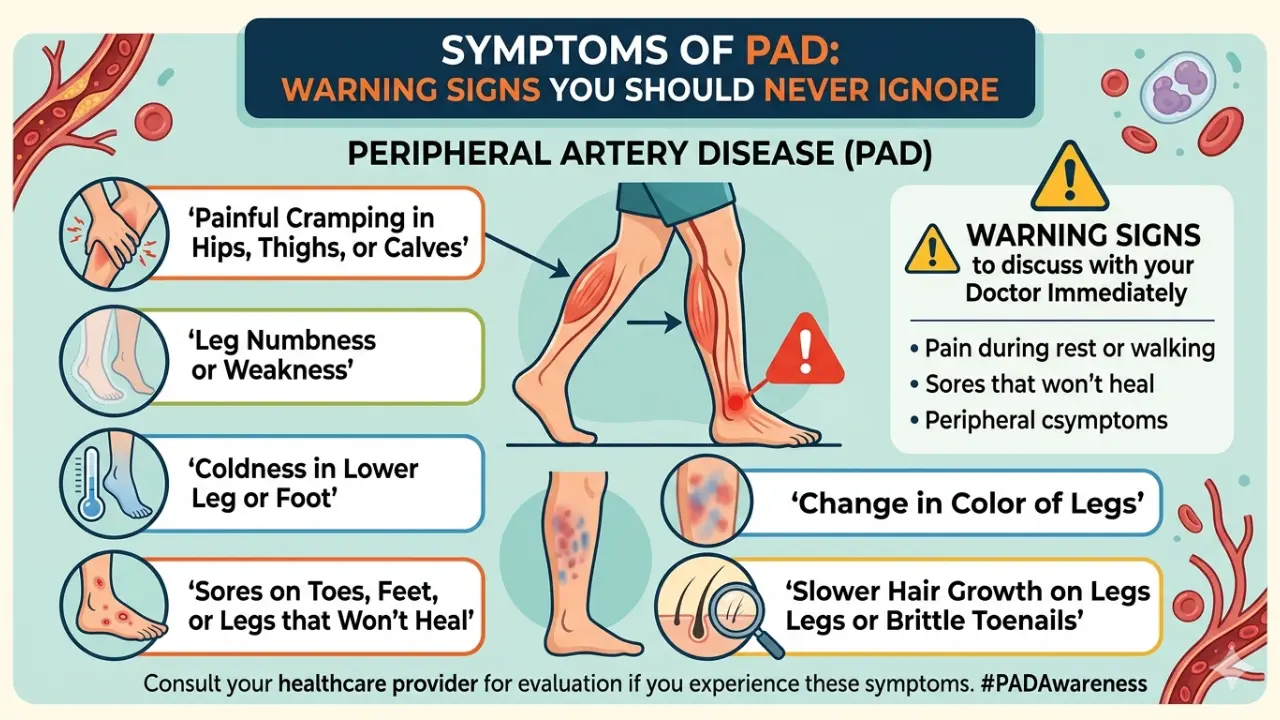
Many people believe that leg pain or a heavy feeling in the limbs is just a natural part of getting older. However, Dr. Himanshu Verma, a dedicated expert in vascular health and an expert in the Treatment of Peripheral Artery Disease in Gurgaon, emphasizes that these signs often point to something more serious. Understanding the Symptoms of PAD (Peripheral Artery Disease) is vital for your long-term health. When fat deposits build up in your arteries, it restricts blood flow to your legs and feet. This condition can lead to severe complications if you do not catch it early.
Dr. Himanshu Verma focuses on helping patients regain their mobility by identifying these issues before they escalate. This blog will guide you through what to look for, from mild discomfort to advanced warning signs. If you are worried about your leg health, learning about the Symptoms of PAD can help you take the right steps toward recovery.
Common Symptoms of Peripheral Artery Disease
Symptoms of Peripheral Artery Disease usually appear when your leg muscles don’t get enough oxygen during activity, causing pain or discomfort due to reduced blood flow. Symptoms of PAD can vary; some people notice nothing early on, while others have clear signs. Dr. Himanshu Verma, a consultant in vascular health and an expert in the Treatment of Peripheral Artery Disease in Gurgaon, advises paying attention to how your legs feel during walking or rest, as early recognition helps prevent the condition from worsening.
Early Symptoms
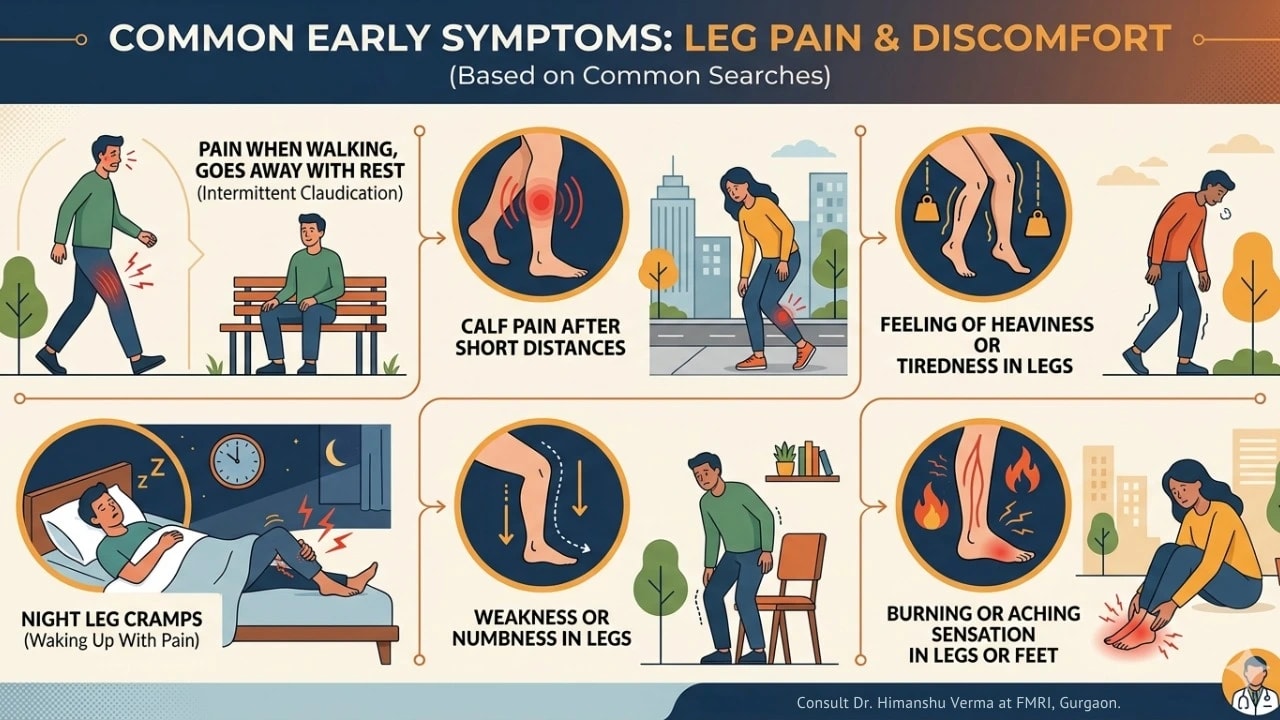
In the beginning, the Symptoms of PAD might only show up when you are moving around. These are the Peripheral Artery Disease symptoms that people search for most often because they can be confusing or easy to dismiss as simple muscle strain.
- Leg pain while walking (relieved by rest): This is known as claudication. You might feel a cramp in your hip, thigh, or calf that goes away after you sit down for a few minutes.
- Calf pain after walking short distances: If your calves start to hurt after just a short stroll, it is a classic example of Peripheral Artery Disease symptoms.
- Heaviness or tiredness in legs: Your legs might feel like lead or simply feel exhausted after minimal physical activity.
- Night leg cramps: Sudden, painful muscle spasms while you are trying to sleep can be a major indicator of the Symptoms of PAD.
- Weakness in legs: You may find that your legs feel "rubbery" or lack the strength they usually have.
- Burning or aching sensation: A persistent ache or a burning feeling in the feet or toes is one of the common Peripheral Artery Disease symptoms.
If you recognize these Peripheral Artery Disease symptoms, it is time to consult a professional like Dr. Himanshu Verma, a specialist in vascular health and Peripheral Artery Disease treatment in Varanasi.
Moderate Symptoms
As the blockage in the arteries becomes more significant, the Symptoms of PAD will start to change. You may notice that Peripheral Artery Disease symptoms are present even when you are not exercising. This stage requires more immediate attention to avoid permanent damage.
- Pain even at rest (especially at night): When you lie down, gravity no longer helps the blood flow to your feet. This can cause significant pain that keeps you awake.
- Cold feet or one leg colder than the other: Poor circulation often results in one foot feeling noticeably colder than the other.
- Numbness or tingling: You might feel "pins and needles" or a loss of sensation in your lower limbs.
- Skin color changes (pale or bluish): If your legs look pale when raised or turn a bluish color when hanging down, these are serious Symptoms of PAD.
Dr. Himanshu Verma often tells his patients that resting pain is a signal that the tissues are struggling to survive. Addressing these Symptoms of PAD now is essential.
Advanced Symptoms (Severe Disease)
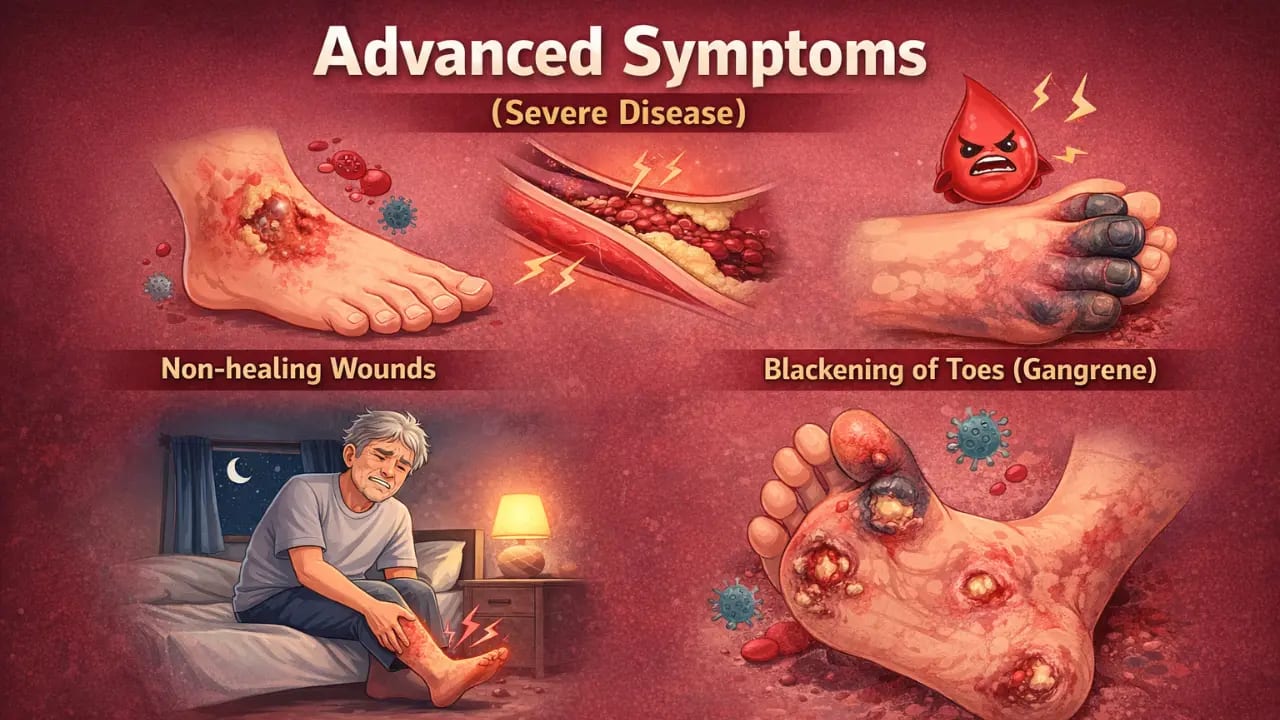 When the Symptoms of PAD reach the advanced stage, the situation becomes a
medical priority. At this point, the lack of blood flow is so severe that
the skin and tissues begin to break down. These Peripheral Artery Disease
symptoms are often referred to as critical limb ischemia.
When the Symptoms of PAD reach the advanced stage, the situation becomes a
medical priority. At this point, the lack of blood flow is so severe that
the skin and tissues begin to break down. These Peripheral Artery Disease
symptoms are often referred to as critical limb ischemia.
- Non-healing wounds on the foot or toes: Small cuts or blisters that do not heal after a few weeks are major Peripheral Artery Disease symptoms.
- Blackening of toes (gangrene): This is a sign of tissue death due to a total lack of oxygen and nutrients.
- Severe pain at rest (especially at night): The pain becomes constant and difficult to manage with over-the-counter medicine.
- Foot ulcers: Deep sores that appear on the feet or toes are advanced Symptoms of PAD that need urgent care.
Dr. Himanshu Verma specializes in advanced Peripheral Artery Disease treatment in Delhi to save limbs and improve the quality of life for those facing these severe Symptoms of PAD.
Other Signs of PAD (Often Ignored)
There are several other Peripheral Artery Disease symptoms that people often overlook. These might not cause pain, but they indicate that your vascular system is struggling.
- Weak or absent pulse in feet: A doctor like Dr. Himanshu Verma will check for a pulse in your ankles or feet to see how well blood is moving.
- Shiny skin on legs: The skin may appear tight and glossy due to the lack of proper nourishment.
- Hair loss or slow hair growth on legs: If you notice patches where hair no longer grows, it could be one of the Symptoms of PAD.
- Slow-growing toenails: Brittle nails or nails that take a long time to grow are common Symptoms of PAD.
- Erectile dysfunction (in men): Artery blockages are not limited to the legs; they can affect blood flow throughout the body.
When to See a Doctor
If you have risk factors like smoking, high blood pressure, or diabetes, you should be even more vigilant about the Symptoms of PAD. Dr. Himanshu Verma recommends regular checkups if you are over the age of 50 or if you have a family history of heart disease. Ignoring Peripheral Artery Disease symptoms will not make them go away. In fact, early intervention can often reverse some of the damage and prevent the need for surgery later on.
The range of Symptoms of PAD is broad. You might experience mild discomfort that feels like a nuisance, or you might have severe pain that stops you from walking. No matter where you fall on that spectrum, the Symptoms of PAD deserve your attention.
Conclusion
Your leg health is a direct reflection of your overall vascular health. The Symptoms of PAD are your body's way of telling you that your circulation needs help. From the early aches of claudication to the more frightening signs like non-healing wounds, every symptom is a "warning sign" you should never ignore. Dr. Himanshu Verma is committed to helping patients understand these Symptoms of PAD and finding the right path to wellness.
Take control of your health today. If you have noticed any of these Peripheral Artery Disease symptoms, do not wait for them to get worse. Reach out for a consultation and keep your legs moving for years to come.
Take the First Step Toward Better Circulation
If you are experiencing leg pain, cramps while walking, or unusual changes in your legs or feet, don’t ignore these warning signs. Early diagnosis of PAD can prevent serious complications and help you stay active and pain-free.
Dr. Himanshu Verma is a highly qualified vascular specialist known for his patient-focused approach and accurate diagnosis of vascular conditions. With advanced training in vascular and endovascular care, he has helped many patients manage PAD effectively and improve their quality of life.
Using modern diagnostic techniques and years of clinical expertise, Dr. Himanshu Verma ensures every patient receives the right diagnosis and a personalized treatment plan.
Book Your Consultation Today
Get your symptoms evaluated by an expert and take control of your vascular health.
Contact: 88268 33598
Email: varenyamvascular@gmail.com
Location:
Fortis Memorial Research Centre,
Opposite HUDA City Centre,
Sector 44, Gurugram, Haryana – 122003
Don’t wait for symptoms to get worse. Take the first step toward healthier, stronger legs today.