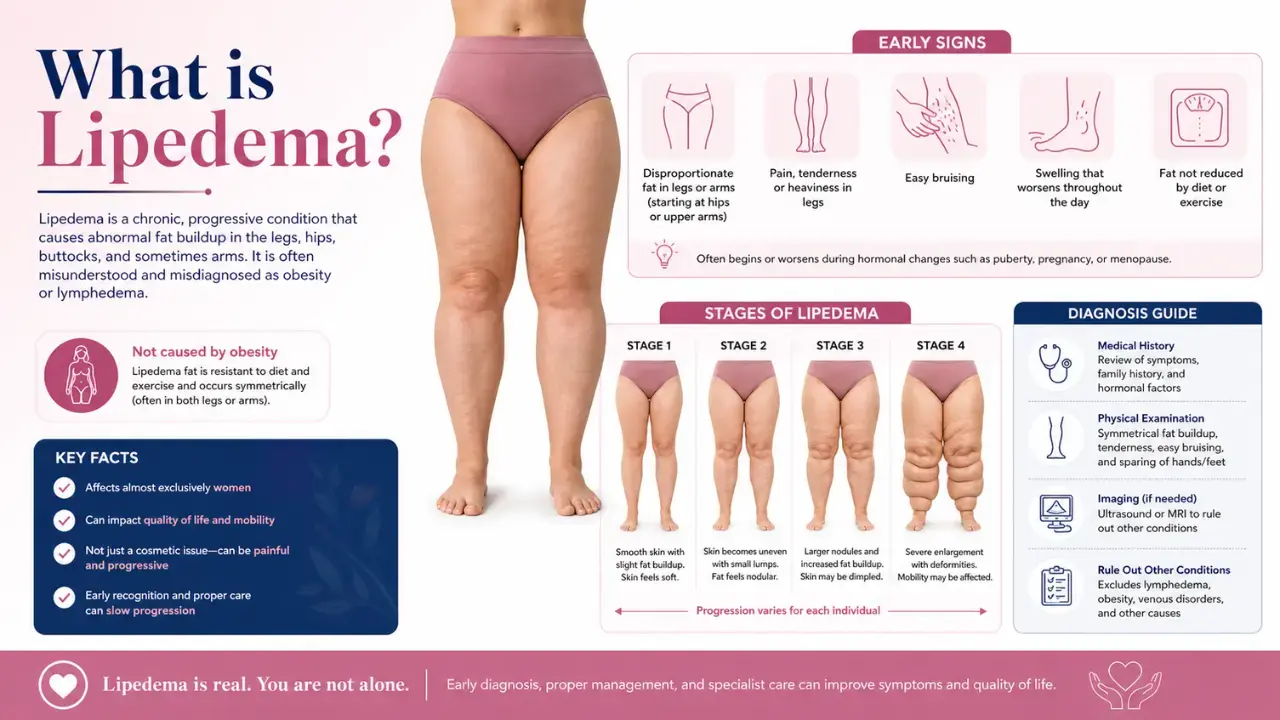
What Is Lipedema?
Lipedema is a fat storage disorder and chronic body fat tissue disorder that causes an abnormal buildup of fat, mainly in the legs, hips, and sometimes the arms. Unlike general obesity, lipedema legs create symmetrical fat buildup below the waist while the upper body stays slimmer, a hallmark of this abnormal fat distribution disorder.
As a connective tissue disorder, lipedema fat is structurally different from normal fat: it bruises easily, is painful to touch, and traps fluid. Over time, this leads to lymphatic system dysfunction, progressing into lipo-lymphedema, a serious chronic swelling condition.
Crucially, lipedema is not caused by poor lifestyle choices. It has a strong hormonal and genetic basis, yet thousands of women across India go undiagnosed for years.
Why Does Lipedema Mostly Affect Women?
Lipedema is almost exclusively a condition affecting women, with prevalence estimates ranging from 1% to 11% depending on the diagnostic criteria used. This chronic body fat tissue disorder, which has a strong hormonal association, typically appears or worsens during:
- Puberty
- Pregnancy
- Perimenopause and menopause
- Starting or stopping hormonal contraceptives
There is also a strong genetic component if your mother, sister, or grandmother had disproportionately large lower bodies or painful, easily bruised legs; lipedema may run in your family. It is a recognised chronic adipose tissue disorder that clusters in families.
Recognising the Symptoms of Lipedema
-
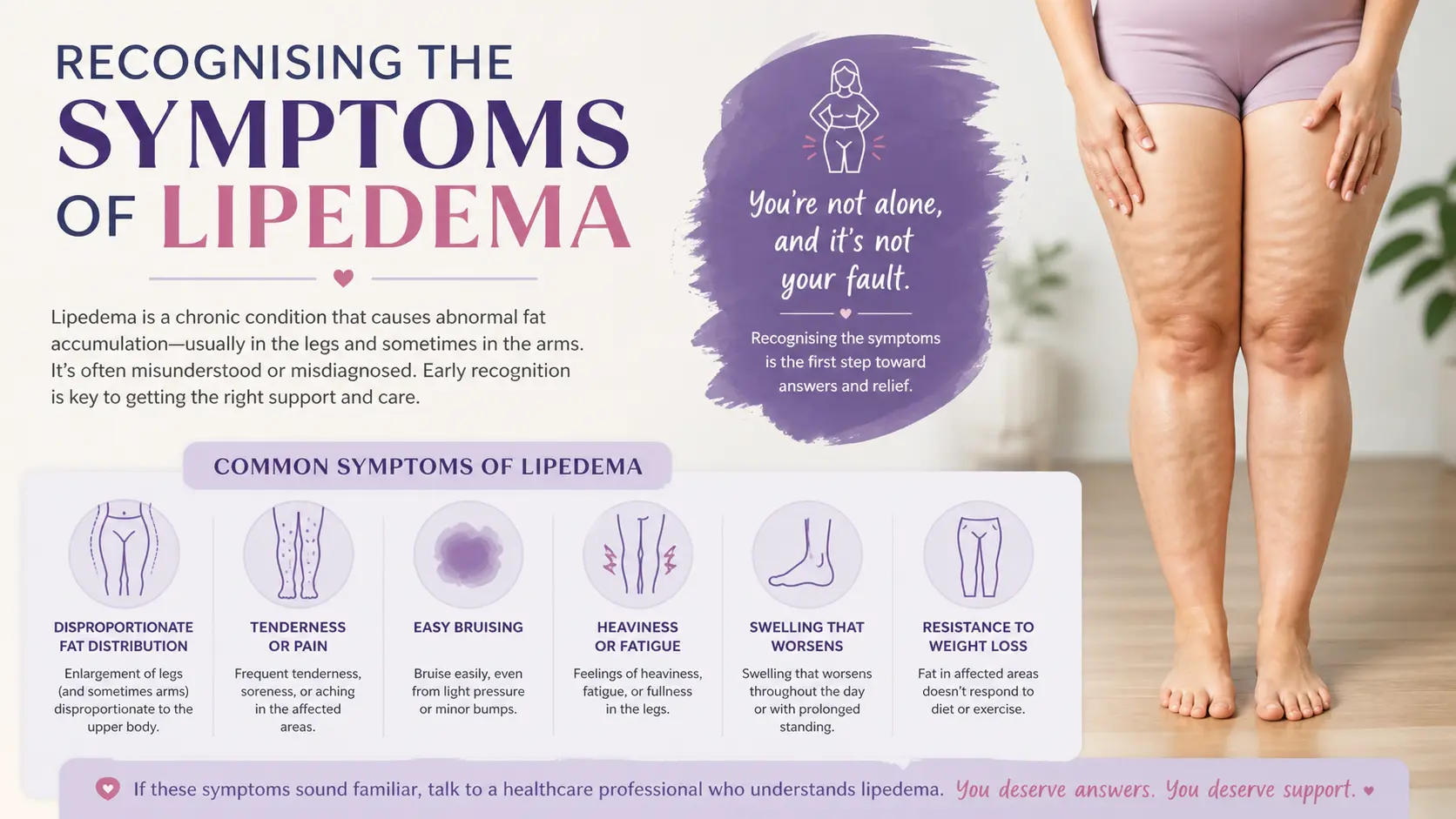 Heavy Lipedema Legs:
Persistent heaviness in both legs that worsens through the day, even
without physical exertion.
Heavy Lipedema Legs:
Persistent heaviness in both legs that worsens through the day, even
without physical exertion.
- Pain and Tenderness: The defining feature of lipedema as a painful fat disease is that even light pressure, touch, or clothing can cause deep aching, tightness, or burning in the fat tissue.
- Disproportionate Fat Resistant to Diet and Exercise: Lipedema legs fat does not respond to calorie restriction or exercise. Upper body may decrease while lipedema in the legs and hips remains unchanged, a clear sign of this abnormal fat distribution disorder.
- Easy Bruising: Frequent, unexplained bruising due to fragile blood vessels within the affected fat tissue.
- Day-Worsening Swelling: Swelling increases through the day but, importantly, spares the feet in early stages, distinguishing lipedema legs from lymphedema.
Note: Not every patient with heavy legs or swelling has lipedema. A proper clinical evaluation is essential.
Lipedema vs Obesity: Key Differences
| Feature | Lipedema | Obesity |
|---|---|---|
| Fat Distribution | Symmetrical, lower body | Generalised throughout the body |
| Response to Diet/Exercise | Not responsive | Reduces with a calorie deficit |
| Pain in Fat Tissue | Yes, tender and painful | Generally not painful |
| Easy Bruising | Common | Not a feature |
| Feet Involvement (Early) | Feet typically spared | May be affected |
A person can have both conditions simultaneously. After significant weight loss, the lipedema fat becomes even more apparent, often the moment a diagnosis finally becomes clear.
The Four Stages of Lipedema
-
 Stage 1:
Skin looks normal, but the fat underneath is nodular and tender.
Symmetrical fat buildup begins in the hips and thighs. Lipedema legs feel
heavy.
Stage 1:
Skin looks normal, but the fat underneath is nodular and tender.
Symmetrical fat buildup begins in the hips and thighs. Lipedema legs feel
heavy.
- Stage 2: Skin develops an uneven, mattress-like texture. Larger fat nodules form. End-of-day swelling in lipedema legs becomes pronounced.
- Stage 3: Large lobes of fat overhang the knees and ankles. Movement becomes difficult. Risk of lymphatic system dysfunction increases significantly.
- Stage 4 (Lipo-Lymphedema): This chronic swelling condition combines lipedema with lymphedema, causing severe, hard swelling, skin changes, infection risk, and major mobility impairment.
Most patients in earlier stages respond very well to conservative, non-surgical treatment.
How Is Lipedema Diagnosed?
There is no single blood test that confirms lipedema legs; it is primarily a clinical diagnosis based on:
- Medical history and physical examination, including fat distribution, tenderness, bruising, swelling pattern, and a negative Stemmer's sign
- Ultrasound imaging identifies structural changes in the subcutaneous fat layer and detects early lymphatic system dysfunction
- Lymphoscintigraphy was ordered in selected cases where lymphatic involvement is suspected
- Ruling out other conditions, including hypothyroidism, chronic venous insufficiency, and primary lymphedema
Treatment Options for Lipedema
-
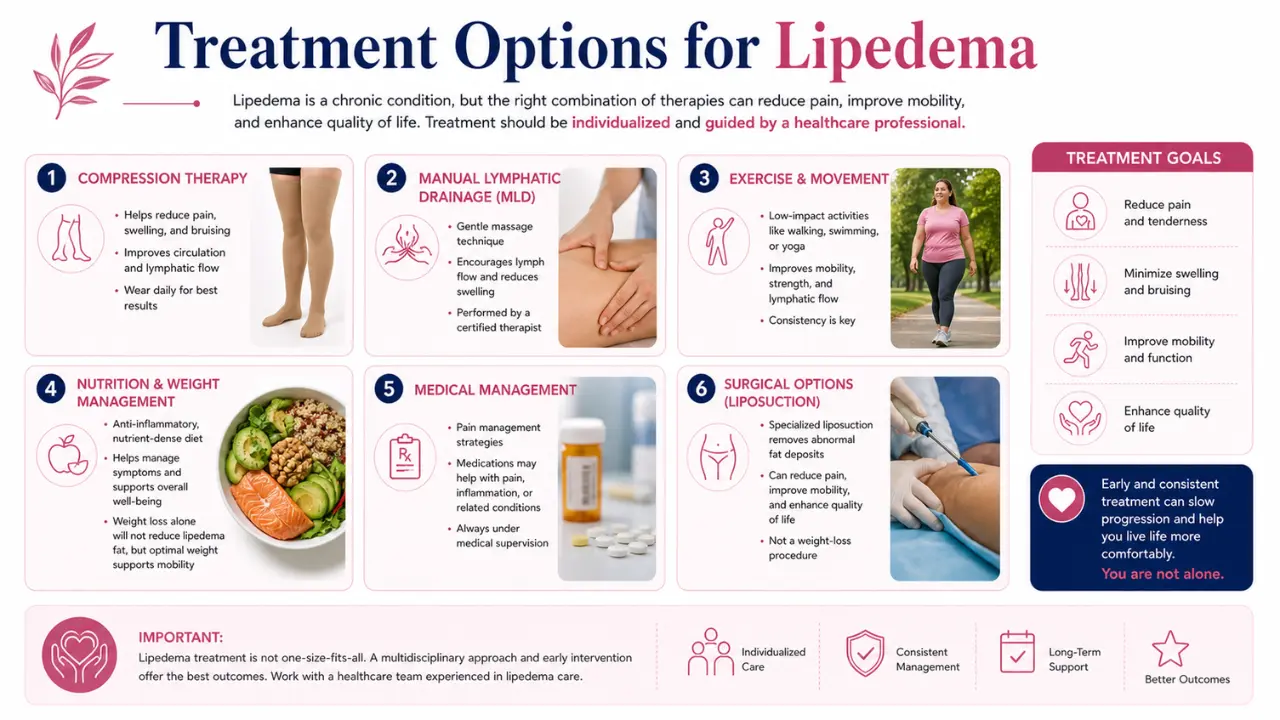 Conservative (Non-Surgical) Management
is effective for most patients, especially in Stages 1 and 2:
Conservative (Non-Surgical) Management
is effective for most patients, especially in Stages 1 and 2:
- Complete Decongestive Therapy (CDT): manual lymphatic drainage, compression bandaging, skin care, and therapeutic exercises
- Medical-grade compression garments: manage the chronic swelling condition in lipedema legs
- Aquatic exercise: low-impact movement that encourages lymphatic flow
- Anti-inflammatory nutrition: reduces internal inflammation associated with this painful fat disease
- Psychological support: addresses the emotional burden of living with a misunderstood condition
- Surgical Management: For advanced stages, water-jet-assisted or tumescent liposuction can target the abnormal fat while preserving lymphatic channels. This is not cosmetic surgery; the goal is pain relief, improved mobility, and preventing disease progression. Surgery is only recommended when conservative care is insufficient for patients seeking Lipedema Treatment in Gurgaon.
Why Choose Dr Himanshu Verma for Lipedema?
Dr Himanshu Verma brings focused vascular and lymphatic expertise to every lipedema consultation, a combination that is rare in Gurgaon. With years of experience managing complex lipedema and lymphatic conditions, he offers a comprehensive, evidence-based approach that goes far beyond a routine surgical consultation. His approach includes:
- Accurate diagnosis using advanced imaging and clinical evaluation
- Stage-appropriate, personalised treatment plans
- Integrated vascular and lymphatic care under one roof
- Long-term management and continuity of support
- Patient-centred consultations that provide clarity and a clear path forward
All of this is available at Fortis Memorial Research Centre, Sector 44, Gurgaon, accessible to patients from Delhi, Noida, Faridabad, and across Haryana.
Living With Lipedema legs
Receiving a diagnosis often brings profound relief. Patients stop blaming themselves, stop pursuing ineffective solutions, and start a management approach that genuinely works. Living well with this chronic adipose tissue disorder is entirely possible with the right support, realistic goals, and consistent care.
Conclusion
Lipedema legs are a real, recognised hormonal fat accumulation disorder, not a personal failing. If you have heavy, painful lipedema legs that do not respond to diet or exercise, easy bruising, and a clear lower-upper body disproportion, please seek a proper evaluation.
Dr Himanshu Verma, a vascular surgeon in Gurgaon, Delhi NCR, provides comprehensive assessments for lipedema legs and related lymphatic and vascular conditions. Patients from Gurgaon, Noida, Haryana, and across Delhi NCR consult him for expert, patient-centred care
Take the First Step Toward Relief from Lipedema
If you’re experiencing heavy, painful legs, easy bruising, or fat that doesn’t respond to diet and exercise, it’s time to get clarity. Early diagnosis can make a significant difference in managing lipedema effectively.
Consult with Dr Himanshu Verma, an experienced vascular specialist providing advanced evaluation and personalised treatment for lipedema, lymphedema, and related conditions.
Call Now: 88268 33598
Email: varenyamvascular@gmail.com
Visit Clinic: Fortis Memorial Research Centre, Opposite HUDA City Centre, Sector 44, Gurugram, Haryana 122003
Don’t ignore the signs. Get the right diagnosis, the right treatment, and the right support. Book your consultation today and explore our other services, including PAD management, advanced vein diagnostics, and comprehensive vascular health care.