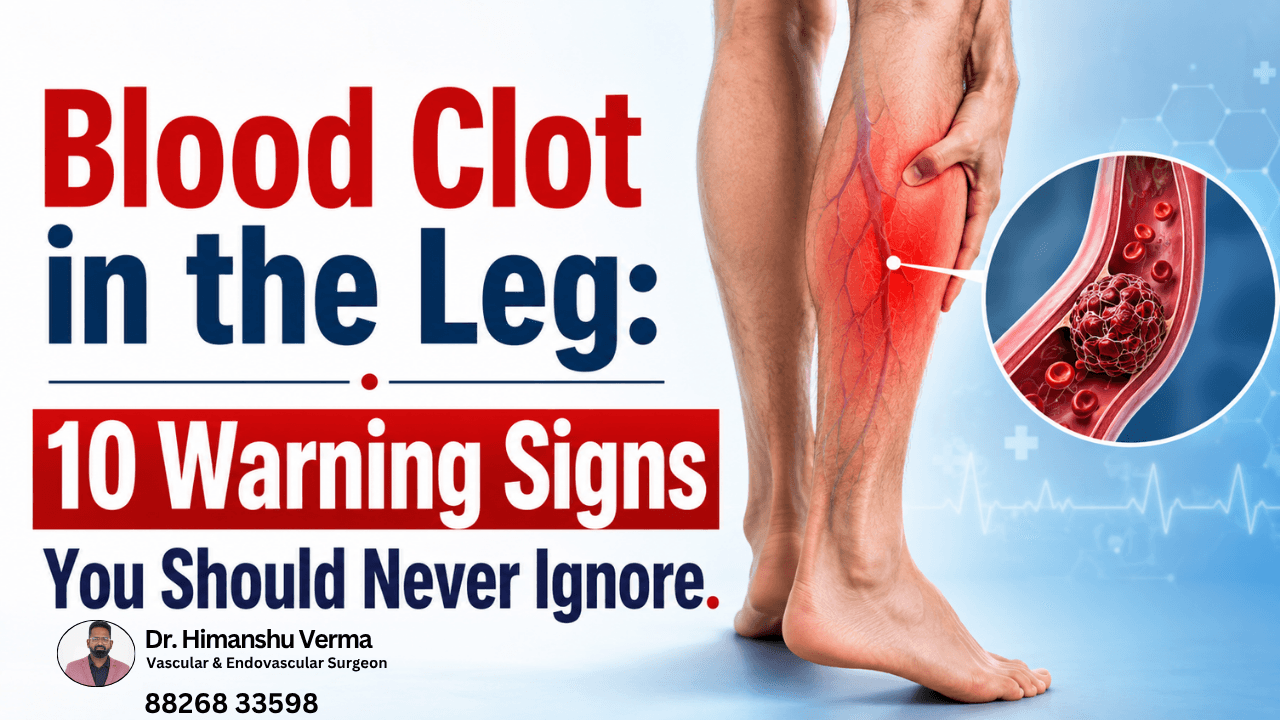
A blood clot in the leg is not something to shrug off as "just a cramp" or "muscle strain." Left unnoticed, it can escalate from mild swelling to a life-threatening emergency within days. As a vascular and endovascular surgeon, I see patients every month who delayed a hospital visit because they didn't recognise the early signs — and some of them paid a heavy price for that delay.
This blog walks you through what a blood clot in the leg actually is, the ten warning signs you should never ignore, and when it's time to see a specialist.
What Is a Blood Clot in the Leg?
A blood clot in the leg, medically known asDeep Vein Thrombosis(DVT), forms when blood thickens and clumps together inside one of the deep veins — usually in the calf or thigh. When someone says "I think I have a blood clot in my leg," they're usually describing symptoms of DVT: swelling, pain, warmth, or discoloration in one leg that appeared without an obvious injury.
The real danger isn't just the clot itself — it's what happens if a piece breaks loose. It can travel through the bloodstream to the lungs and cause a pulmonary embolism, which is a medical emergency.
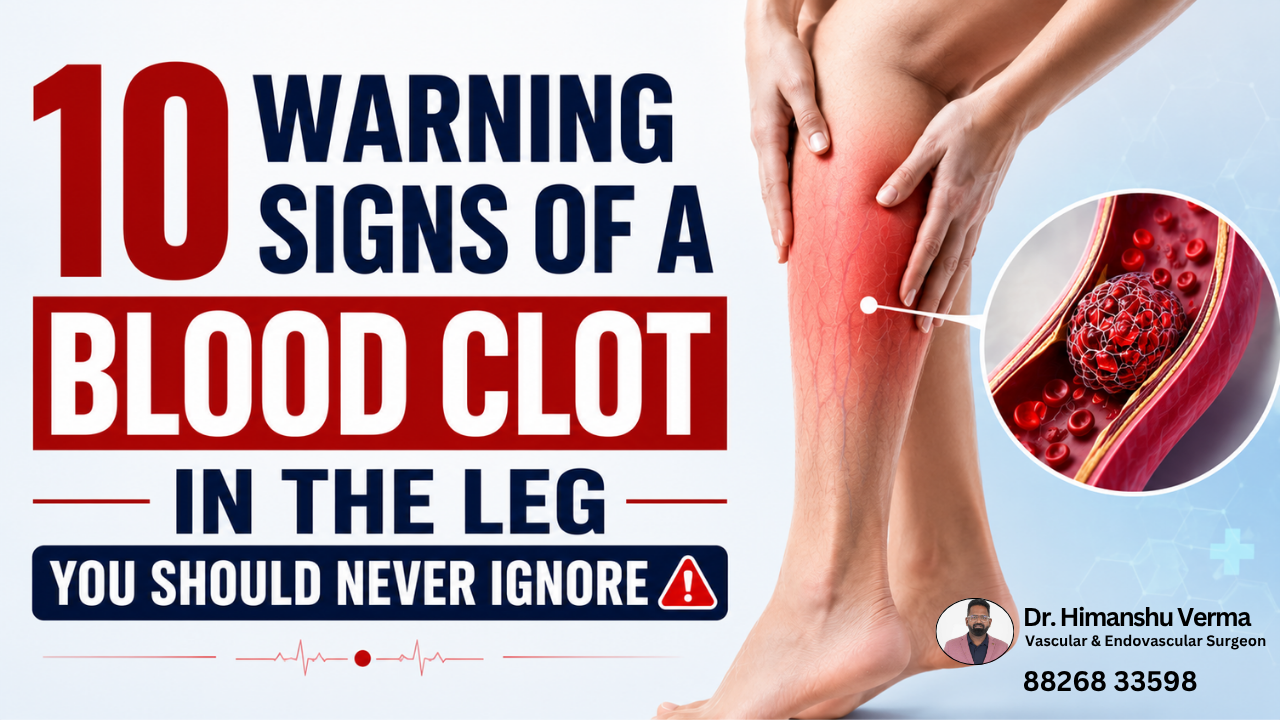
10 Warning Signs of a Blood Clot in the Leg You Should Never Ignore
5. Swelling in One Leg
Sudden swelling in just one leg, not both, is one of the most common and telling signs of DVT. If your ankle, calf, or entire leg looks visibly puffier than the other, don't wait it out.
4.Persistent Leg Pain or Cramping
Pain that feels like a deep ache or cramp, often starting in the calf, and doesn't go away with rest or stretching. It may worsen when you flex your foot upward or stand for long periods.
3.Warmth Over the Affected Area
If a specific patch of your leg feels noticeably warmer than the surrounding skin or the other leg, this is often a sign of inflammation caused by a clot.
4. Redness or Skin Discoloration
Skin over the clot may turn red, purplish, or even bluish. This discoloration usually follows the path of the affected vein.
5. A Heavy or Tight Feeling in the Leg
Many patients describe a sensation of heaviness or tightness, as though the leg is being squeezed from the inside — even before visible swelling appears.
6. Visible Surface Veins
Veins near the skin's surface may become more prominent or engorged as blood struggles to flow past the blockage.
7. Tenderness When Touched
Pressing gently on the calf or thigh may trigger sharp tenderness in a specific spot, unlike generalised muscle soreness.
8. Sudden Numbness, Tingling, or Weakness
When a clot presses against surrounding structures, it can affect the nearby nerves. A blood clot in the leg nerve can cause tingling, numbness, or a "pins and needles" sensation, and in some cases, temporary weakness in the leg or foot. This symptom is often mistaken for a pinched nerve or sciatica, so it's frequently overlooked.
9. Skin That Feels Tight and Shiny
As fluid builds up around the clot, the skin over the affected area can appear stretched, shiny, and firm to the touch.
10. Sudden Shortness of Breath or Chest Pain
This is the red-flag symptom that demands immediate emergency care. If leg symptoms are accompanied by breathlessness, rapid heartbeat, chest pain, or coughing up blood, the clot may have already travelled to the lungs. Call for emergency help immediately — don't drive yourself.
Why You Should Never "Wait and See"
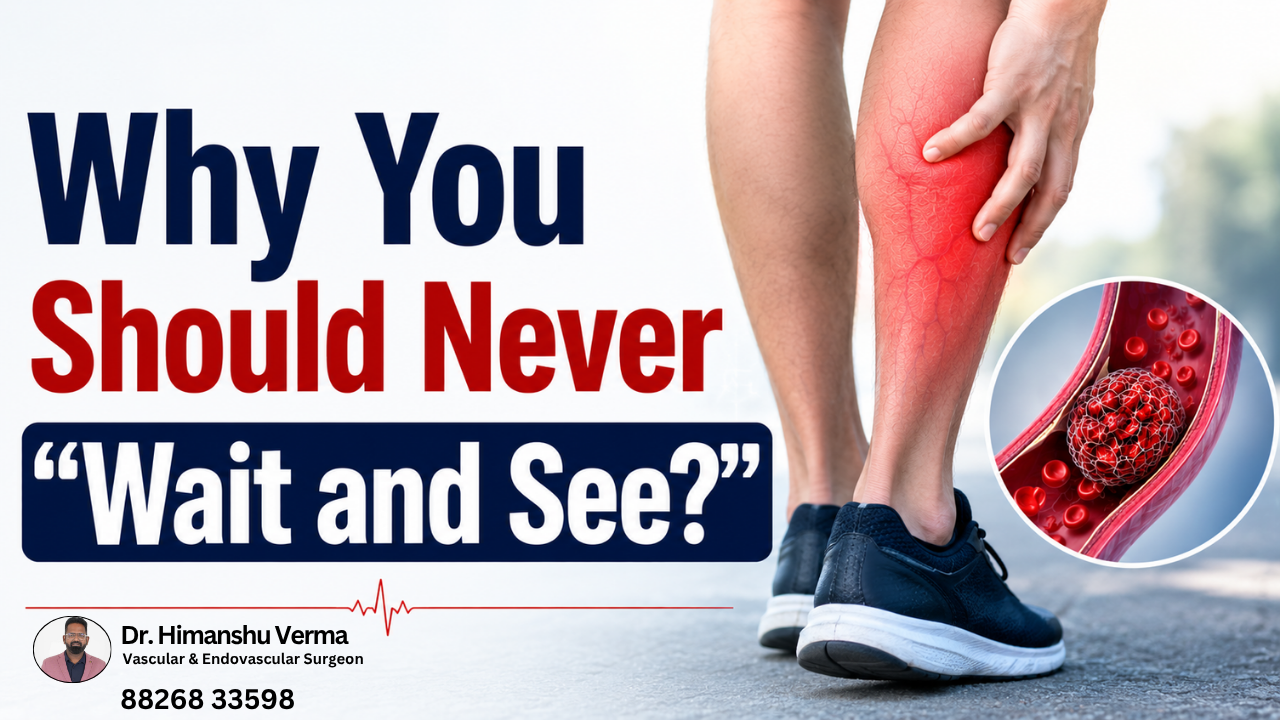
A lot of patients tell me, "I thought it would go away on its own." Unfortunately, blood clots don't resolve themselves safely. Ignoring the signs increases the risk of:
Pulmonary embolism— a potentially fatal blockage in the lungs
Chronic venous insufficiency— long-term leg swelling, pain, and skin changes
Post-thrombotic syndrome— persistent discomfort and reduced mobility even after the clot resolves
Nerve compression— ongoing numbness or weakness if the clot presses on nearby nerves
If you're asking yourself, "how do you know if it's a blood clot in the leg or just a muscle pull?" — the biggest clue is that DVT symptoms are usually one-sided, get worse over time rather than better, and don't respond to rest, ice, or stretching the way a pulled muscle typically would.
Who Is at Higher Risk?
Certain factors make a blood clot in the leg more likely:
Prolonged immobility (long flights, bed rest after surgery)
Recent surgery, especially orthopaedic or abdominal procedures
Pregnancy and the postpartum period
Obesity
Smoking
Use of hormonal birth control or hormone replacement therapy
Personal or family history of clotting disorders
Cancer and certain cancer treatments
Age above 60
If you fall into one or more of these categories and notice any of the warning signs above, don't delay a check-up.
How Is a Blood Clot in the Leg Diagnosed?
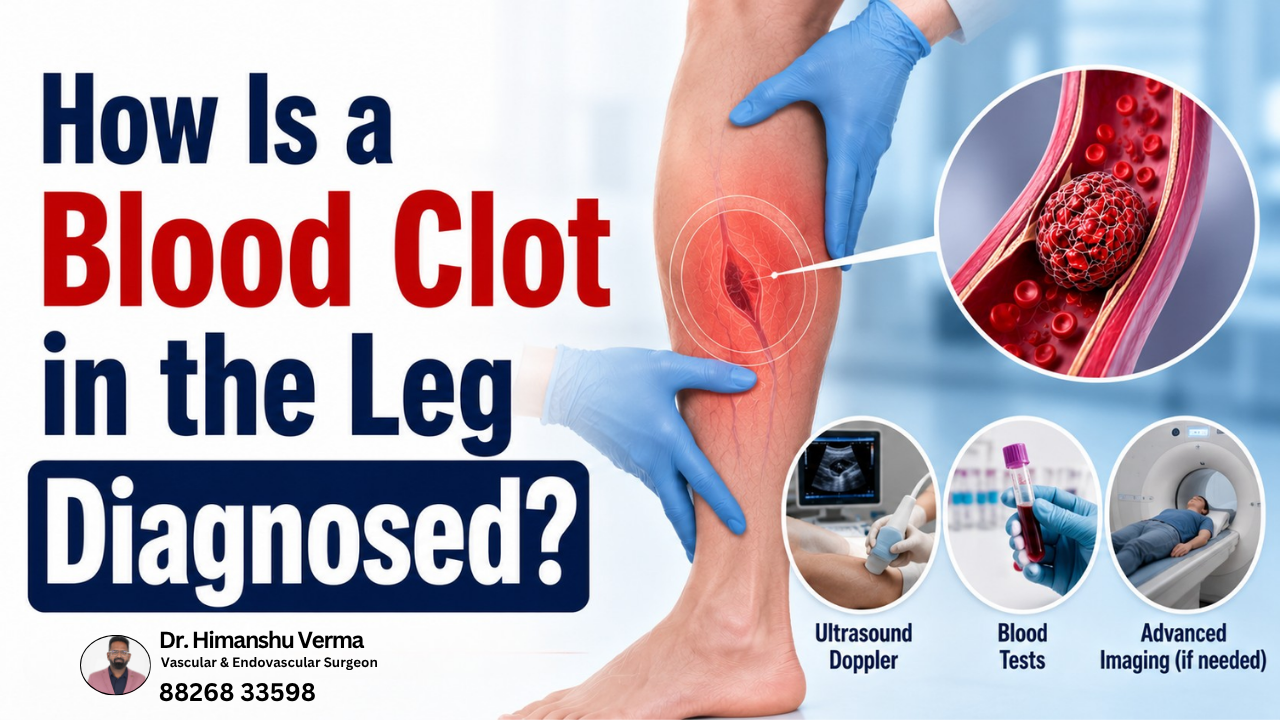
At a specialised blood clot in leg treatment hospital, diagnosis usually involves:
Doppler ultrasound— the primary, non-invasive test to visualise blood flow and detect clots
D-dimer blood test— checks for elevated levels of a substance released when a clot breaks down
Venography— an imaging test used in select cases for a more detailed view of the veins
CT or MRI scans— used if a pulmonary embolism is suspected or the clot's exact location needs mapping
Treatment Options for Blood Clots in the Leg
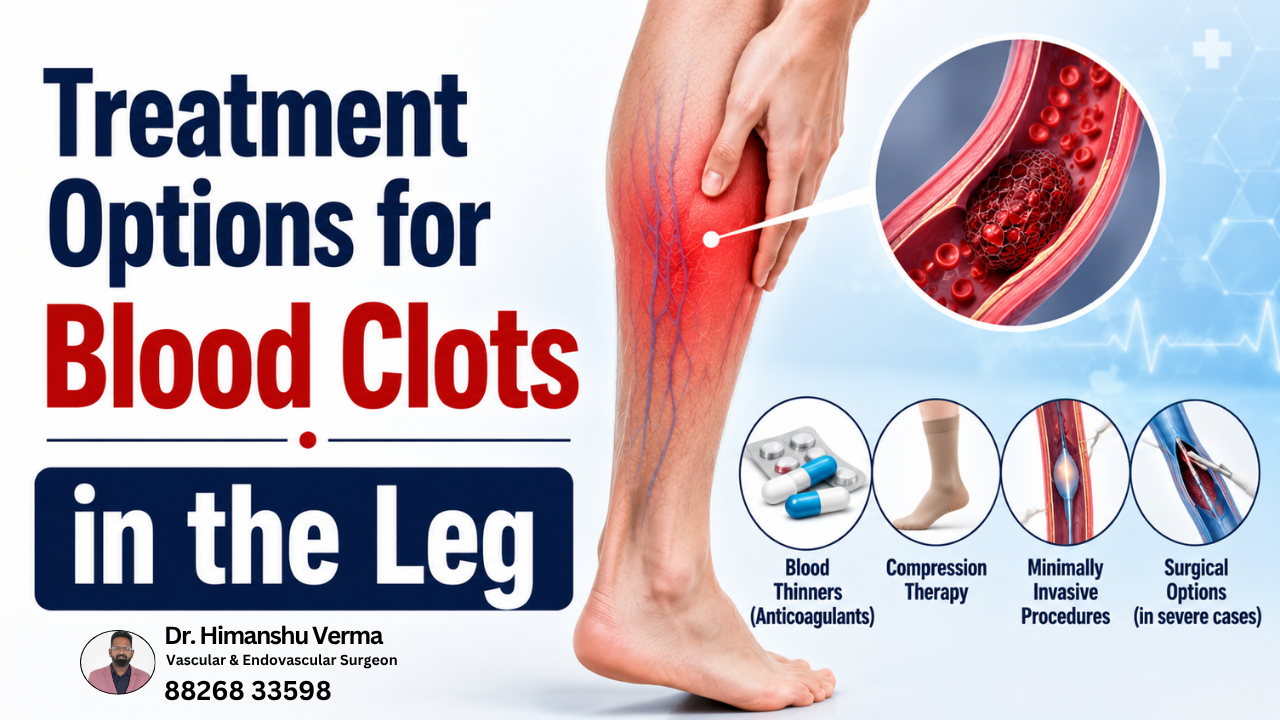
Treatment depends on the size, location, and risk posed by the clot, and may include:
Anticoagulant (blood-thinning) medicationto stop the clot from growing and prevent new ones from forming
Compression stockingsto reduce swelling and support circulation
Thrombolytic therapy— clot-dissolving medication for larger or more dangerous clots
Catheter-directed procedures— minimally invasive endovascular techniques to remove or break down the clot directly
IVC filter placement— in select high-risk cases, to prevent clots from reaching the lungs
Surgical thrombectomy— surgical removal of the clot when other treatments aren't suitable
As a vascular and endovascular surgeon, I always evaluate each case individually, because the right treatment path varies significantly from patient to patient.
When Should You See a Vascular Surgeon?
If you notice one-sided leg swelling, pain that isn't improving, unusual warmth, discoloration, or numbness, it's time to get evaluated — the same day, not next week. And if you experience breathlessness or chest pain alongside leg symptoms, treat it as a medical emergency and seek immediate care.
Early diagnosis and treatment make an enormous difference in outcomes. Most blood clots, when caught early, are very manageable with the right medical care.
Dr. Himanshu Verma is a Vascular and Endovascular Surgeon practicing at Fortis Hospital, Gurgaon. If you're experiencing symptoms of a blood clot in the leg, book a consultation for timely diagnosis and treatment.