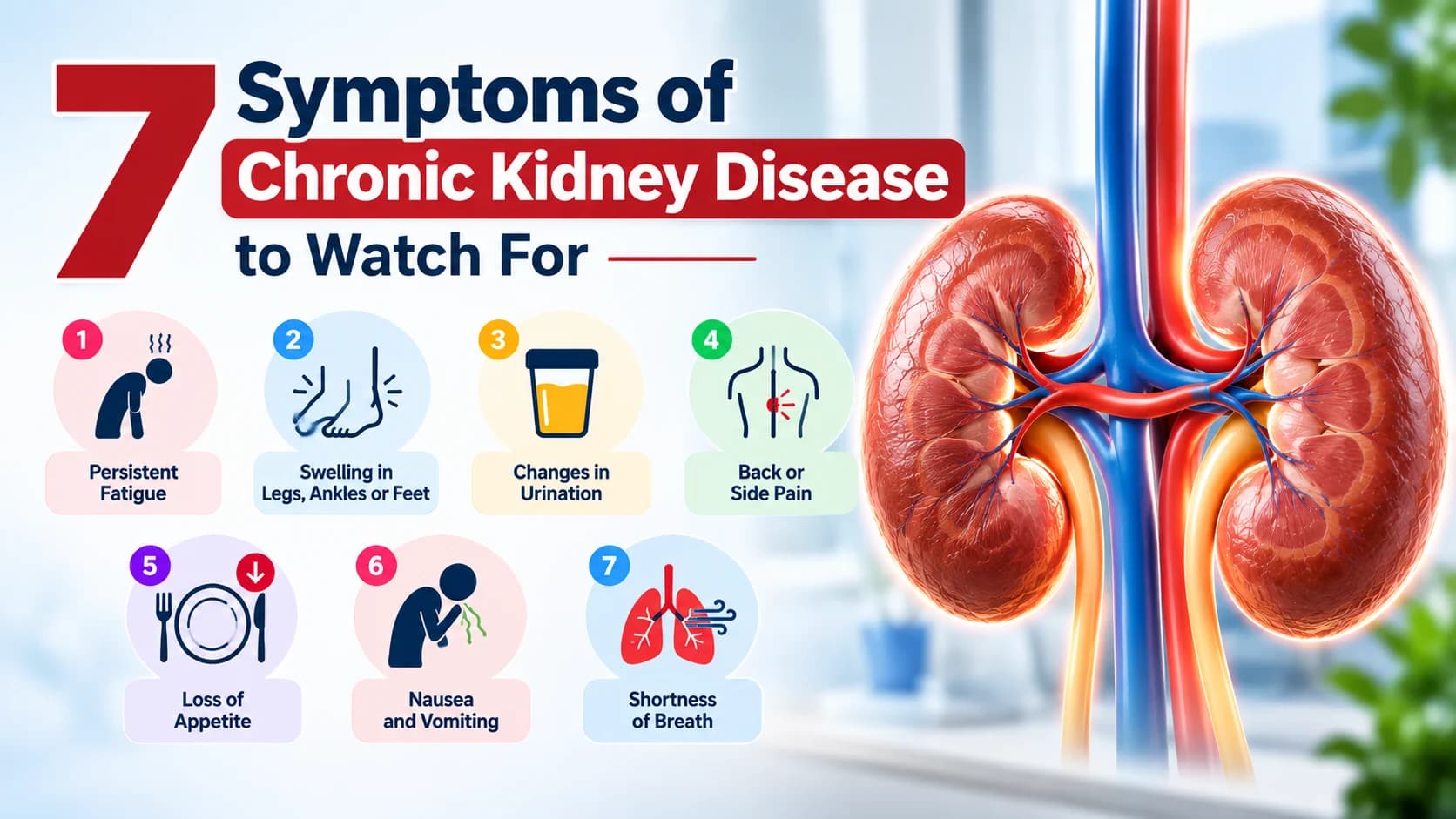
Your kidneys are two fist-sized organs that work around the clock, filtering over 200 litres of blood every single day, removing waste, balancing fluids, and regulating blood pressure. Yet chronic kidney disease (CKD) is often called a "silent disease" because it quietly damages your kidneys over months or years before most people notice anything is wrong.
In India, CKD affects an estimated 17% of the adult population, and many cases go undiagnosed until the disease has already reached an advanced stage. As a vascular surgeon who works closely with patients experiencing kidney-related vascular complications, I see this pattern far too often. The good news? Recognising the symptoms of chronic kidney disease early can make a meaningful difference in slowing, and sometimes stopping, its progression.
What Is Chronic Kidney Disease (CKD)?
Chronic kidney disease (CKD) is a long-term condition in which the kidneys gradually lose their ability to filter waste products, excess fluids, and toxins from the blood. Unlike acute kidney injury, which develops suddenly and can sometimes be reversed, CKD develops slowly over months or years and is often irreversible once significant damage has occurred.
The kidneys' filtering capacity is measured using a value called the eGFR (estimated glomerular filtration rate) . A healthy kidney has an eGFR of 90 or above. CKD is classified into five stages based on how far this number has declined:
-
Stage 1–2: Mild damage, eGFR still relatively normal, usually no symptoms
-
Stage 3: Moderate decline in kidney function, some symptoms may begin
-
Stage 4: Severe reduction of significant symptoms, preparation for treatment needed
-
Stage 5: Kidney failure (end-stage renal disease), dialysis or transplant required
What makes CKD particularly dangerous is that the kidneys are remarkably adaptive; they compensate quietly for a long time, which is why most people feel perfectly fine until the disease is already at Stage 3 or beyond. This is why knowing the symptoms of chronic kidney disease and acting on them early is so critical.
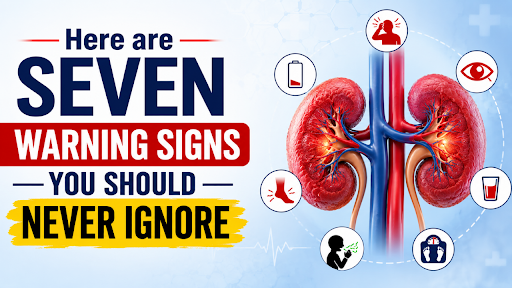
Here are seven warning signs you should never ignore
1. Changes in Urination: One of the Earliest Signs
One of the most telling early indicators involves changes in urination kidney disease patients frequently overlook. You may notice you're urinating more frequently, especially at night (a condition called nocturia). Alternatively, urine output may decrease significantly, or your urine may appear foamy, a sign that protein is leaking through damaged kidney filters.
Blood in the urine, giving it a pink, brown, or tea-like colour, is another red flag. Any persistent change in the frequency, colour, or appearance of your urine warrants a conversation with your doctor.
2. Persistent Fatigue and Weakness
Healthy kidneys produce a hormone called erythropoietin, which signals the body to make red blood cells. When the kidneys are damaged, this hormone production drops, leading to anaemia. The result is a deep, persistent fatigue that sleep simply doesn't fix, a classic kidney disease symptom that is frequently mistaken for stress or overwork.
If you find yourself constantly exhausted without a clear reason, don't dismiss it as burnout. It could be your kidneys asking for attention.
3. Swelling in the Legs, Ankles, and Feet
Damaged kidneys struggle to eliminate excess sodium from the body. This causes fluid to accumulate in the tissues, leading to noticeable swelling, particularly in the lower legs, ankles, and feet. This is known as oedema, and it is one of the more visible signs of kidney disease that brings patients to the clinic.
In some cases, swelling can also occur around the eyes, especially in the morning. If you press your thumb into a swollen area and the indentation remains for a few seconds, that is "pitting oedema", a sign worth reporting to your physician promptly.
4. High Blood Pressure That Is Difficult to Control
The relationship between high blood pressure and kidney disease runs in both directions, which is what makes it particularly dangerous. Poorly controlled hypertension damages the small blood vessels inside the kidneys, impairing their ability to filter blood. At the same time, damaged kidneys struggle to regulate blood pressure effectively, pushing it even higher.
This vicious cycle can accelerate kidney deterioration rapidly. If your blood pressure remains stubbornly high despite medication, or if your doctor is finding it increasingly difficult to control it, a kidney function test should be part of the evaluation.
5. Diabetes-Related Kidney Damage
Diabetes and chronic kidney disease share a deeply connected relationship. Diabetic nephropathy is, in fact, the single leading cause of CKD in India. High blood sugar over time damages the tiny filtering units (glomeruli) inside the kidneys, reducing their ability to clean the blood.
People living with Type 1 or Type 2 diabetes should be screened regularly for kidney disease, even in the absence of symptoms. Early signs may include small amounts of protein in the urine (microalbuminuria), detectable only through a urine test, long before any noticeable symptoms appear. Managing blood sugar diligently is one of the most powerful ways to protect your kidneys.
6. Nausea, Loss of Appetite, and a Metallic Taste

As kidney function gets weaker, waste products start building up in the blood because the kidneys are not able to remove them properly. This can make a person feel sick, causing symptoms such as nausea, vomiting, loss of appetite, and a strange metallic or bad taste in the mouth.
Many patients notice an aversion to meat or other high-protein foods without understanding why. These digestive symptoms, when combined with other signs, are important clues pointing toward the symptoms of chronic kidney disease that must not be brushed aside as a simple stomach complaint.
7. Shortness of Breath and Difficulty Concentrating
Fluid accumulation from impaired kidneys can collect in the lungs, causing breathlessness, particularly when lying down. This is different from breathlessness due to a chest infection and tends to be gradual in onset.
Additionally, the build-up of toxins in the blood can affect brain function, leading to difficulty concentrating, memory problems, and a general sense of mental "fog." These neurological changes are among the more advanced kidney disease symptoms and typically indicate that kidney function has already declined significantly.
In some patients with advanced CKD, dialysis may become necessary to replace lost kidney function. Before starting dialysis, doctors often recommend creating an
AV fistula
, a surgically created connection between an artery and a vein that allows efficient blood flow during haemodialysis.
Who Is Most at Risk?
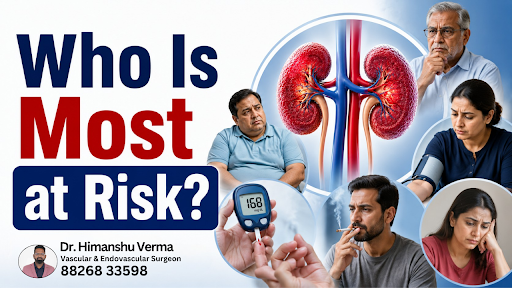
Understanding chronic kidney disease causes helps identify those who should be especially vigilant. The major risk factors include:
-
Diabetes the leading cause of CKD globally
-
High blood pressure the second most common cause
-
A family history of kidney disease
-
Obesity and a sedentary lifestyle
-
Frequent or long-term use of pain medications (NSAIDs)
-
Recurrent kidney infections or kidney stones
-
Age above 60 years
If you fall into any of these categories, routine kidney function tests, including serum creatinine, eGFR (estimated glomerular filtration rate), and a urine albumin-to-creatinine ratio, should be part of your annual health check-up, even if you feel completely well.
When Should You See a Doctor?
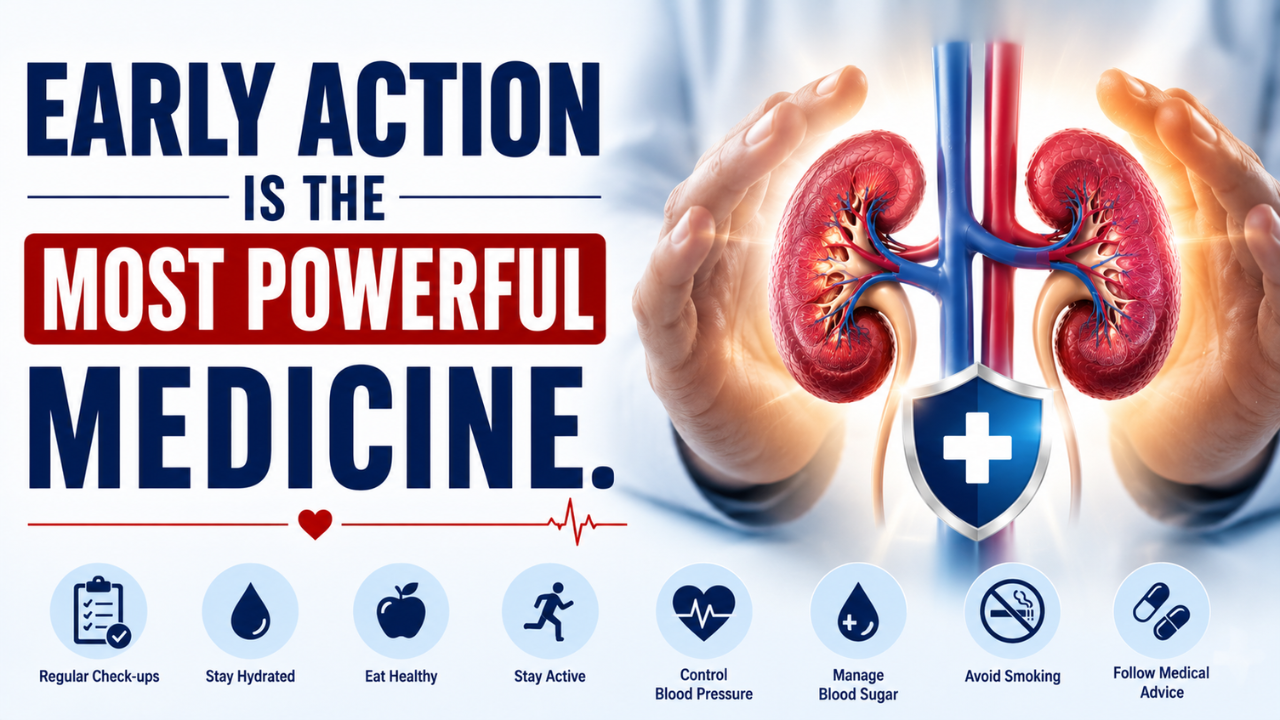
Do not wait for multiple symptoms to appear before seeking medical advice. Even one persistent, unexplained symptom from this list deserves professional evaluation. Chronic kidney disease is staged from G1 (mild) to G5 (kidney failure), and the earlier it is detected, the better the chances of slowing its progression and protecting your quality of life.
At Fortis Hospital, Gurgaon, Dr Himanshu Verma takes an integrated, multidisciplinary approach to kidney health, addressing not only kidney function but also the vascular and metabolic conditions that can contribute to disease progression. If you are concerned about your kidney health or are managing conditions such as diabetes or hypertension, Dr. Himanshu Verma encourages you to seek timely medical advice..
Early action is the most powerful medicine.
Dr Himanshu Verma is a Director Vascular Surgeon at Fortis Hospital, Gurgaon, with expertise in managing vascular complications associated with chronic kidney disease, diabetes, and hypertension.
Disclaimer:
This blog is intended for general educational purposes only and does not constitute medical advice. Please consult a qualified healthcare professional for personalised diagnosis and treatment.