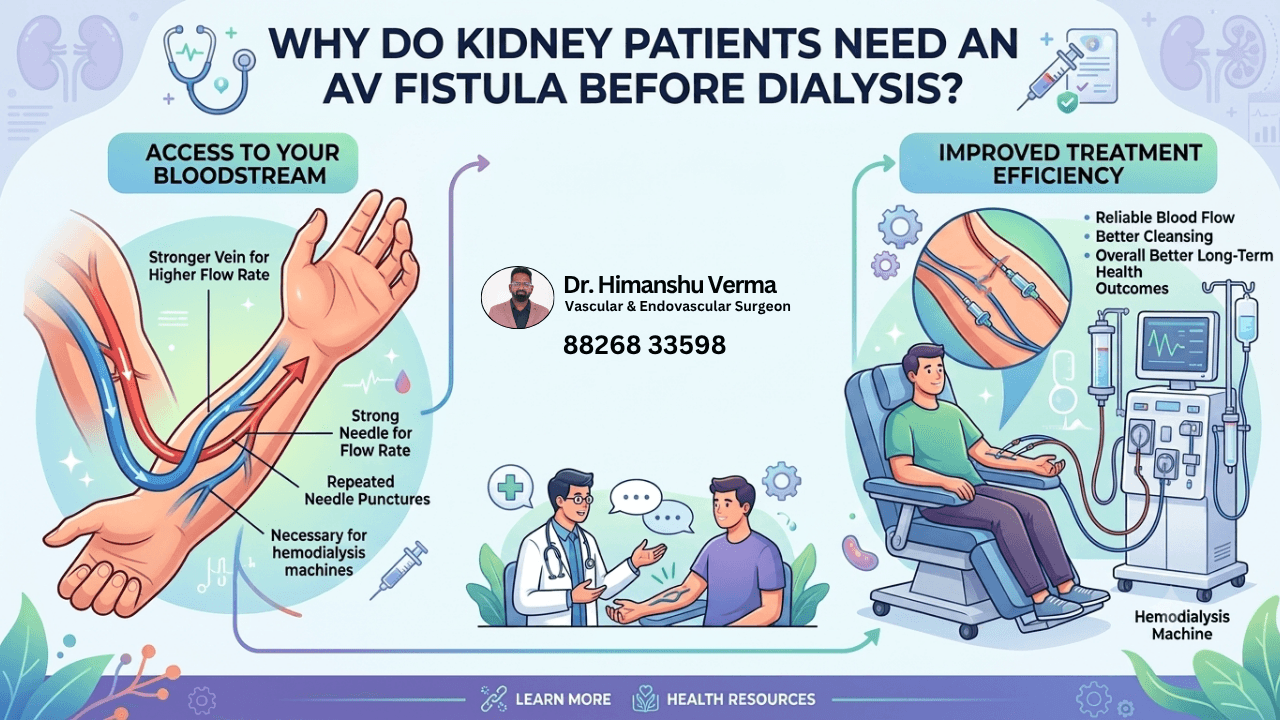
When kidneys stop filtering waste and excess fluid the way they should, dialysis becomes a lifeline. But before a single dialysis session can begin, the body needs a reliable way to move large volumes of blood in and out safely, again and again, sometimes three times a week for years. This is where an AV fistula for dialysis comes in.
Many patients are surprised to learn that dialysis access planning often starts months before the first dialysis session. Understanding why an AV fistula matters, and why timing is so important, can help patients and families make informed decisions alongside their nephrologist and vascular surgeon.
Understanding Dialysis Access
Hemodialysis works by drawing blood from the body, passing it through a dialysis machine that filters out waste and excess fluid, and returning the cleaned blood to circulation. To do this safely and efficiently, the body needs an "access point" capable of handling high blood flow rates repeatedly.
There are three main types of dialysis access:
AV fistula – a surgical connection between an artery and a vein
AV graft – a synthetic tube connecting an artery and vein
Dialysis catheter – a tube placed into a large central vein, usually for temporary or emergency use
Among these, an AV fistula is widely regarded as the gold standard for long-term vascular access. If you'd like a deeper understanding of how this connection is created and how it functions, our detailed guide on what is an arteriovenous fistula explains the anatomy and process in simple terms.
What Exactly Is an AV Fistula?
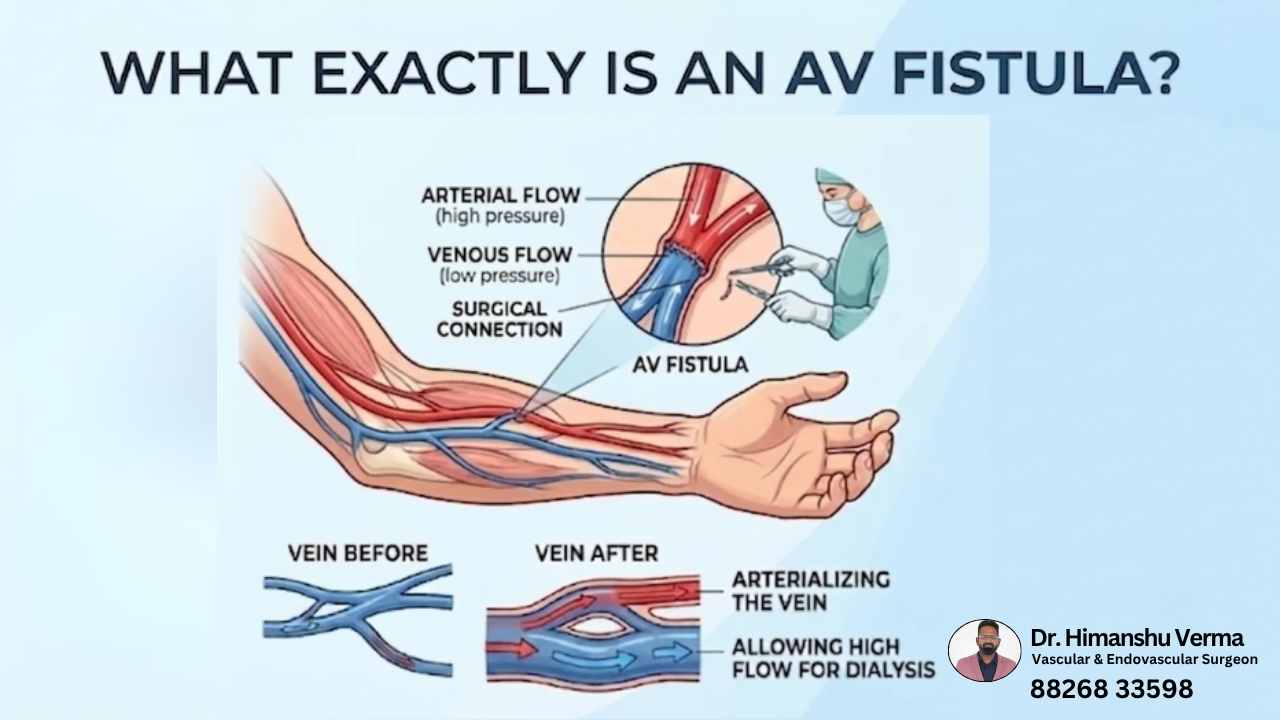
An arteriovenous fistula is created surgically by joining an artery directly to a nearby vein, most commonly in the forearm or upper arm. Arteries carry blood at high pressure and high flow, while veins are thinner and carry blood at lower pressure. When the two are connected, the vein gradually adapts to the increased pressure and blood flow. Over several weeks, it becomes larger, thicker, and stronger, a process doctors call "maturation."
Once matured, this strengthened vein can be safely and repeatedly punctured with dialysis needles, allowing the high blood flow rates that hemodialysis machines require.
Why Kidney Patients Need an AV Fistula Before Dialysis
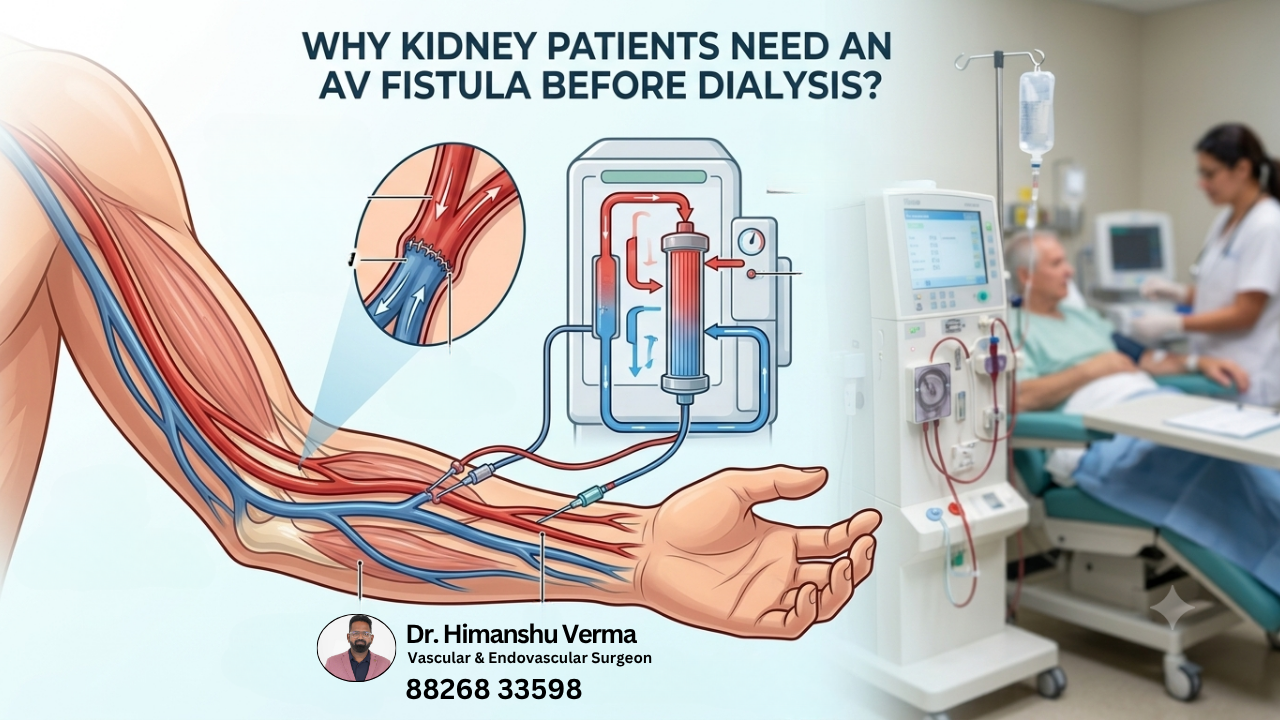
It Supports the High Blood Flow Dialysis Requires
Dialysis machines typically need blood flow rates of 300–500 mL per minute to filter blood efficiently. A normal, unmodified vein simply cannot handle this kind of volume without collapsing or becoming damaged. A mature AV fistula, on the other hand, is built specifically to tolerate this demand session after session.
It Has the Lowest Complication Rates
Compared to grafts and catheters, an AV fistula carries a significantly lower risk of infection, blood clots, and narrowing. Since it uses the patient's own blood vessels rather than synthetic material or an external tube, the body is less likely to reject or react negatively to it.
It Lasts Longer
A well-functioning AV fistula can last for years, sometimes even decades, with proper care. Grafts tend to wear out faster and are more prone to clotting, while catheters are meant only for short-term or emergencies due to their high infection risk.
It Reduces Hospital Visits and Emergency Interventions
Patients who start dialysis with a catheter, because a fistula wasn't planned, often face more frequent hospital visits, catheter-related infections, and emergency procedures. Planning an AV fistula ahead of time helps kidney patients avoid this cycle altogether.
Timing Matters: Maturation Takes Time
This is perhaps the most important reason an AV fistula is created before dialysis actually begins. After surgery, a fistula needs roughly 6 to 12 weeks, sometimes longer, to mature enough for needle use. If a patient waits until kidney function has already failed to consider access, there simply isn't enough time to create and mature a fistula before dialysis becomes necessary. This forces doctors to rely on a temporary catheter, which carries higher risks.
This is why nephrologists generally recommend evaluating vascular access options when chronic kidney disease reaches an advanced stage, well before dialysis is urgently needed. To understand the surgical process, recovery, and what to expect, you can read more about AV fistula treatment in Gurgaon.
AV Fistula vs. Other Access Options
It's natural for patients to wonder how an AV fistula compares to a graft or a catheter. In short:
AV fistula: Best long-term durability, lowest infection risk, needs time to mature
AV graft: Faster to use than a fistula, but higher infection and clotting risk over time
Dialysis catheter: Can be used immediately, but carries the highest infection risk and is generally meant as a bridge, not a permanent solution
If you're weighing these options for yourself or a family member, our comparison guide on AV fistula vs dialysis catheter breaks down the pros, cons, and suitability of each in more detail.
What Happens If Dialysis Starts Without a Fistula?
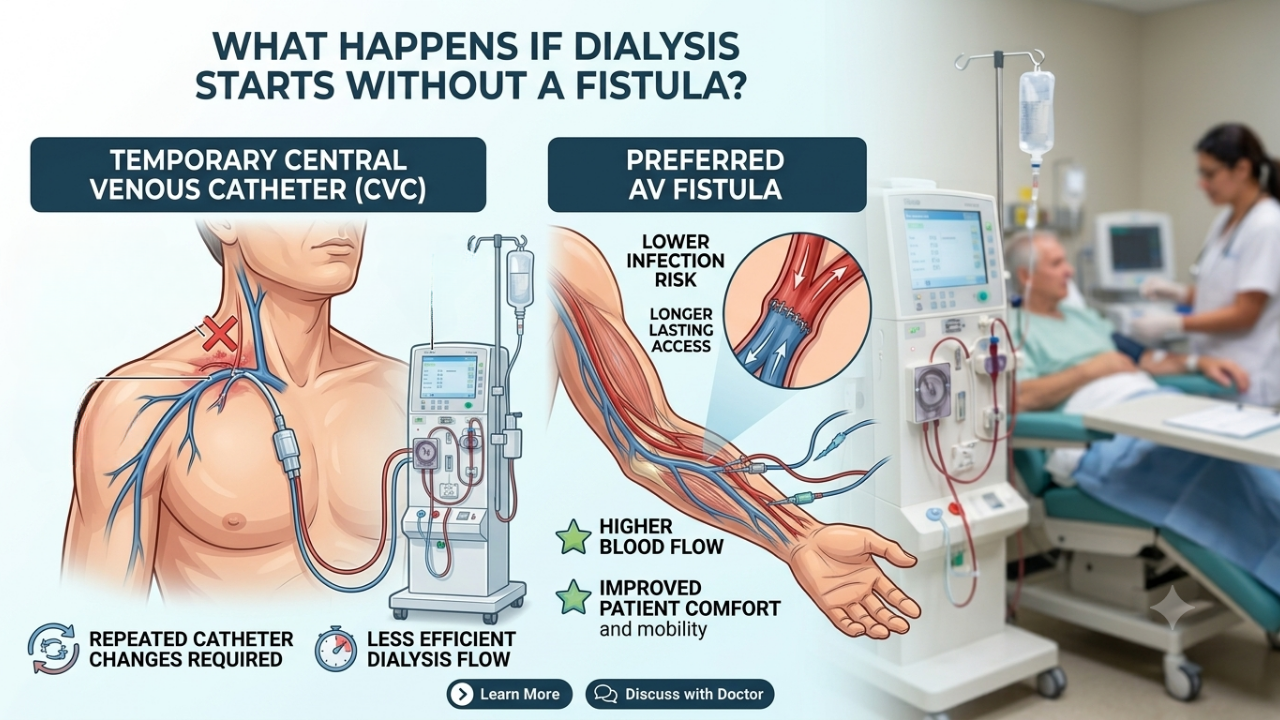
When kidney function declines faster than expected, or when access planning is delayed, doctors often have to place a temporary dialysis catheter to start treatment right away. While this can be life-saving in the short term, catheters are associated with:
Higher rates of bloodstream infection
Increased risk of blood clots
Lower blood flow efficiency compared to a fistula
Greater discomfort and lifestyle restrictions
Once the patient is stable, the medical team will usually still recommend creating an AV fistula for long-term use, since it remains the safer and more durable choice for ongoing hemodialysis.
How the AV Fistula Procedure Works
Creating an AV fistula is typically a relatively straightforward surgical procedure performed under local or regional anesthesia. The surgeon identifies a suitable artery and vein, usually in the non-dominant arm, and joins them together. Most patients go home the same day.
After surgery, the vein needs time to mature, a process patients can support with simple hand exercises, as recommended by their surgeon, to encourage healthy blood flow and vein strengthening. Regular follow-up visits help confirm the fistula is developing well and is ready for use once dialysis becomes necessary.
Choosing the Right Access Plan for Dialysis
Every kidney patient's situation is a little different. Vein quality, arm anatomy, overall health, and the stage of kidney disease all influence which type of access is most appropriate and when it should be created. This is why access planning works best as a collaborative decision between the nephrologist managing kidney disease and a vascular surgeon experienced in dialysis access procedures.
For patients exploring their options, understanding the full range of dialysis access treatment in Gurgaon can help clarify which pathway suits their individual needs, whether that's a fistula, a graft, or, in select cases, a catheter.
If you or a loved one has been diagnosed with advanced chronic kidney disease, having an early conversation with a vascular surgeon about dialysis access can make a meaningful difference in comfort, safety, and long-term outcomes. Dr Himanshu Verma, a vascular and endovascular surgeon based in Gurgaon, works closely with nephrologists to help patients plan and create dialysis access well ahead of time, so that when dialysis does become necessary, the body is already prepared for it.
Final Thoughts
An AV fistula isn't just a surgical detail, it's often the foundation of safe, effective, long-term dialysis care. Because it takes time to mature, planning ahead with a vascular surgeon gives kidney patients the best chance of starting dialysis smoothly, safely, and with fewer complications down the line.
If advanced kidney disease is part of your or your family's journey, discussing dialysis access options early with a qualified specialist can help you prepare with confidence rather than urgency.