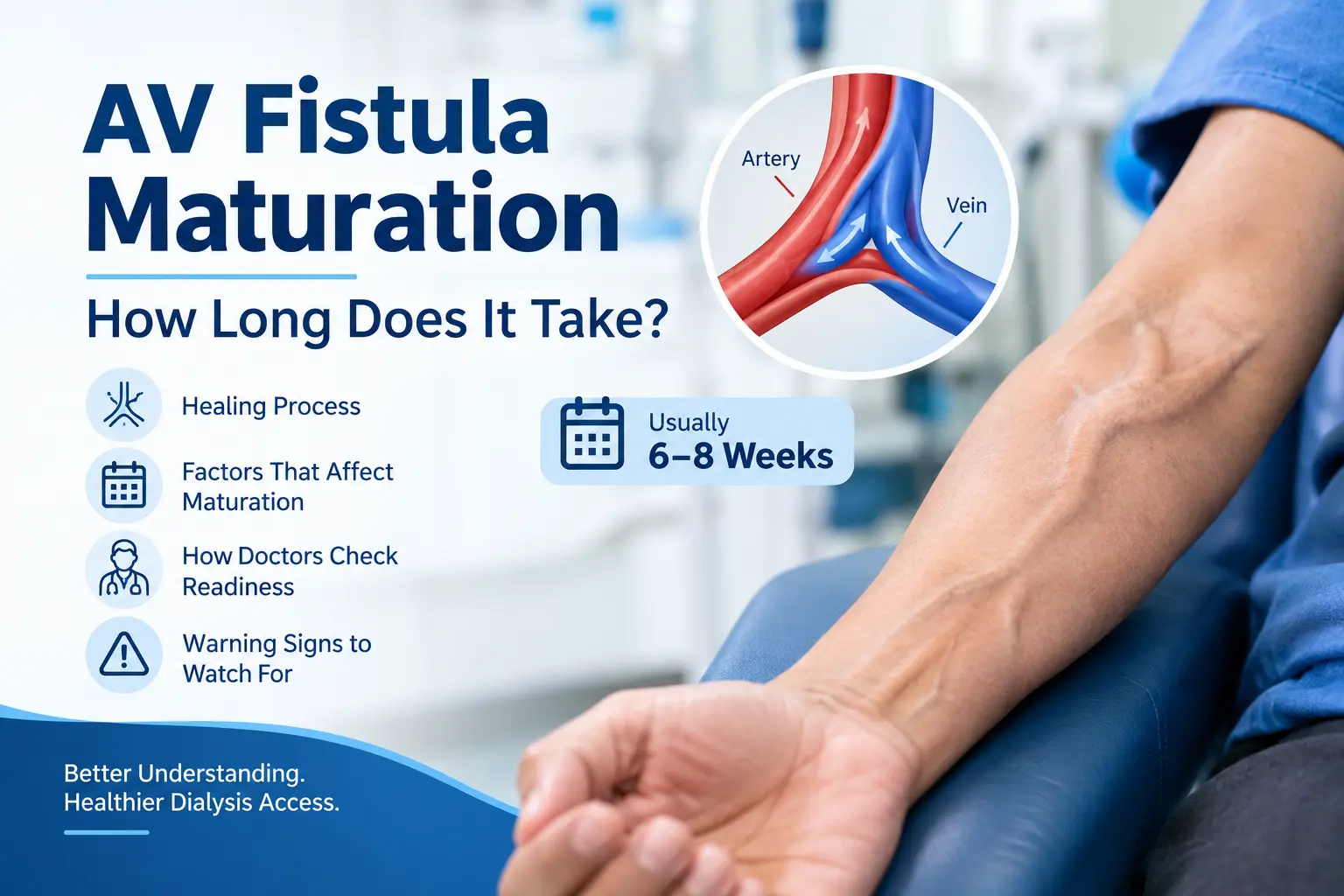
An arteriovenous (AV) fistula is a common type of vascular access used for haemodialysis. It is created through surgery by connecting an artery to a vein, usually in the arm. This connection allows more blood to flow through the vein, helping it become larger and stronger so it can support dialysis.
However, an AV fistula is not usually ready for dialysis immediately after surgery. It needs time to heal and develop adequate blood flow. This process is known asAV fistula maturation.
So, how long does AV fistula maturation take? In many cases, it takes around 6 to 8 weeks, although some fistulas may need more time. The exact timeline depends on blood flow, the size and condition of the blood vessels, and how well the fistula develops after surgery.
Understanding this process can help patients know what to expect, recognise possible problems, and attend follow-up appointments at the right time.
What Is AV Fistula Maturation?
AV fistula maturation is the process through which the connected vein adapts to increased blood flow after surgery. Over time, the vein should become larger and stronger, with enough blood flowing through it to support haemodialysis.
For a fistula to be considered ready for use, it needs more than a healed surgical wound. The blood vessels must develop adequately, and the fistula must be accessible for dialysis needles.
Doctors generally assess three important factors:
Blood flow:Enough blood must move through the fistula to support dialysis.
Vein size:The vein needs to be sufficiently large for safe needle placement.
Vein depth and accessibility:The vein should be accessible for repeated dialysis sessions.
A fistula may look healthy from the outside but still not be ready for dialysis. This is why a clinical examination is important before the first use.
How Long Does AV Fistula Maturation Take?
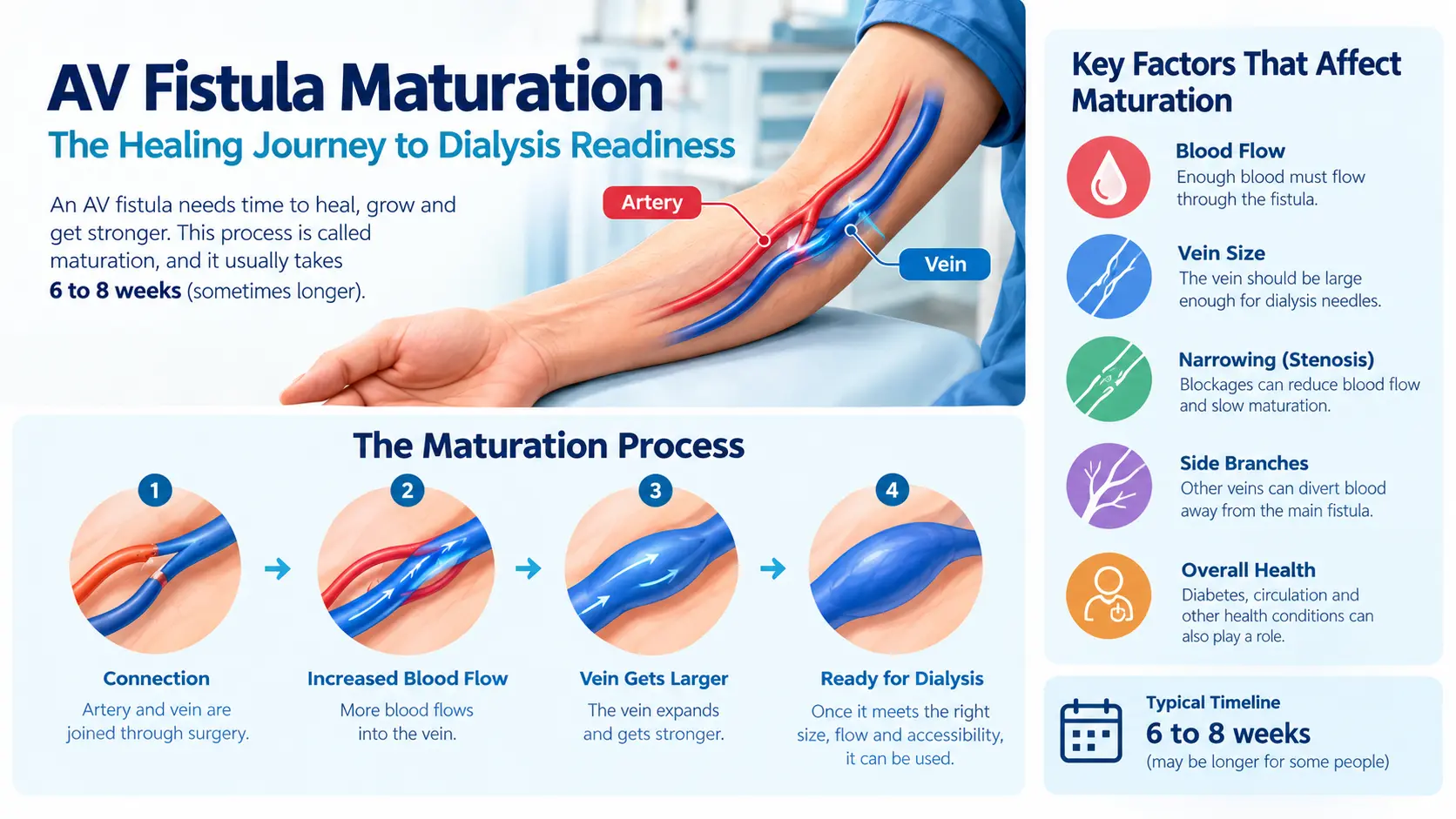
In many patients, AV fistula maturation takes approximately6 to 8 weeksafter surgery. However, some fistulas mature earlier, while others may require several additional weeks.
There is no single timeline that applies to everyone. Factors such as blood vessel quality, the location of the fistula, circulation, and any complications can affect how quickly it becomes usable.
Doctors may assess the fistula within the first few weeks after surgery to check its progress. An examination around 4 weeks can help identify whether the fistula is developing as expected. If there are concerns, further evaluation may be needed rather than simply waiting longer.
A fistula that has not matured adequately by around 6 weeks should generally be evaluated for possible underlying problems. The timing of assessment and any further treatment will depend on the patient's condition and the treating specialist's advice.
Remember:Do not assume that your AV fistula is ready for dialysis just because 6 to 8 weeks have passed. Your doctor or dialysis team must confirm that it is suitable for use.
What Happens During AV Fistula Maturation?
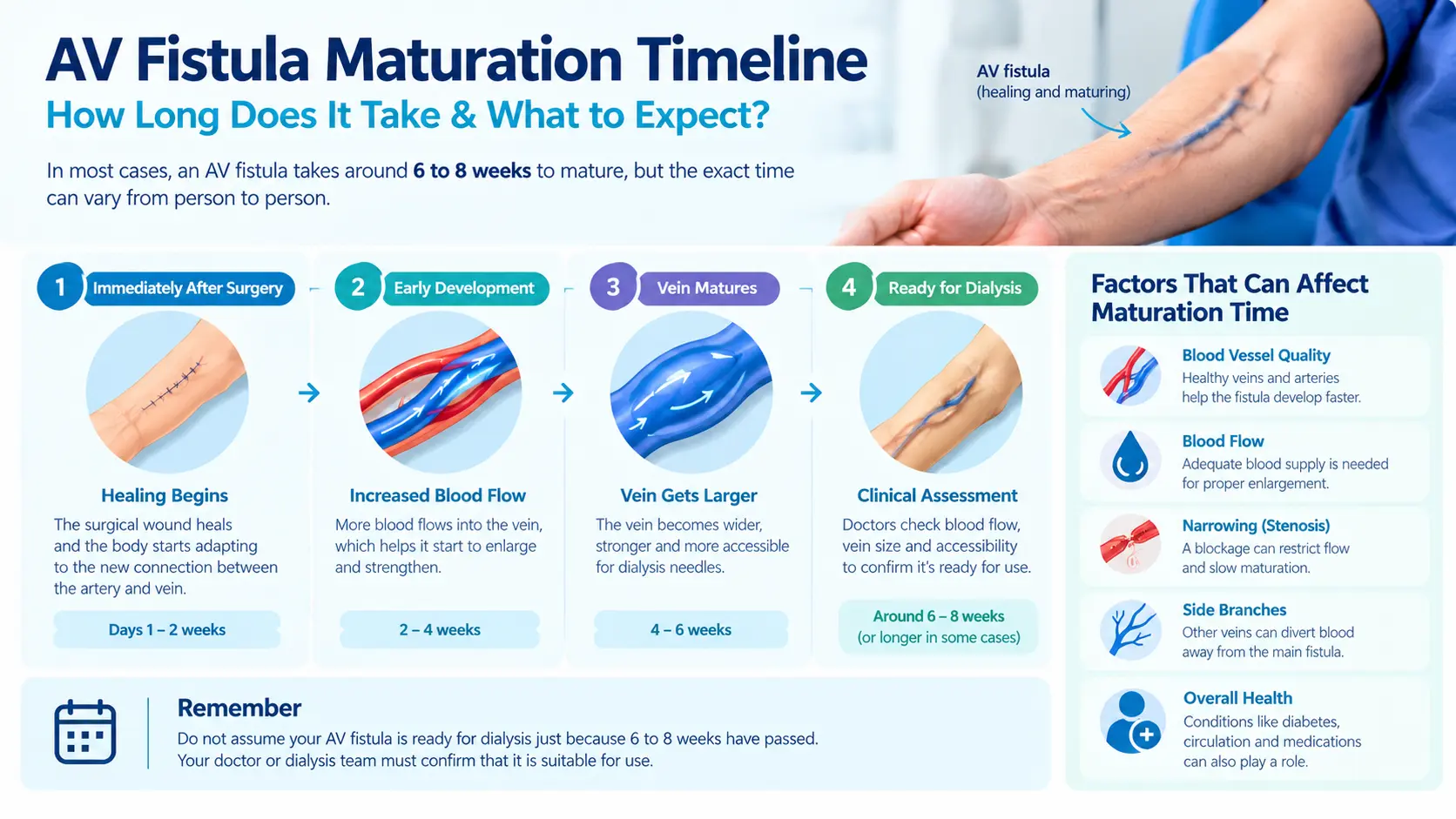
After surgery, the body gradually adapts to the new connection between the artery and the vein. The process involves several changes.
1. Blood Flow Increases
An artery carries blood under higher pressure than a vein. Connecting the two allows more blood to enter the vein. This increased flow helps the vein adapt to its new role.
2. The Vein Becomes Larger
As blood flow increases, the vein may gradually expand and become easier to access. This change is important because dialysis requires needles to be placed into the fistula repeatedly.
3. The Blood Vessel Adapts
The vein undergoes changes in its structure and function as it adapts to the increased blood flow. The aim is to develop an access that can support the blood flow required for haemodialysis.
4. The Medical Team Checks Readiness
The surgeon and dialysis team assess whether the fistula has developed adequately. They may examine it physically and recommend an ultrasound if they need more information about blood flow or vessel size.
Only after appropriate assessment should the fistula be used for dialysis.
What Factors Affect AV Fistula Maturation?
Several factors can influence how quickly an AV fistula matures and whether it becomes suitable for dialysis.
1. The Condition of the Blood Vessels
Healthy veins and arteries can make it easier to create a functional fistula. Small, narrow, scarred, or damaged blood vessels may affect blood flow and slow maturation.
2. Blood Flow Through the Fistula
The fistula needs adequate blood supply to develop properly. If blood flow is too low, the vein may not enlarge sufficiently for dialysis.
3. Narrowing of the Blood Vessel
A narrowing, known as stenosis, can restrict blood flow through the fistula. This may prevent the vein from developing as expected and may require further investigation or treatment.
4. Other Veins Diverting Blood Flow
Sometimes, smaller side branches carry blood away from the main vein. If too much blood flows through these branches, the main fistula vein may not mature adequately.
5. Underlying Health Conditions
Conditions that affect blood vessels and circulation, including diabetes and peripheral vascular disease, may influence fistula development. Previous vascular procedures and the overall condition of the blood vessels can also matter.
6. The Location of the Fistula
The arm and the specific blood vessels used for surgery can influence maturation. Your surgeon selects the site based on your vascular anatomy, medical history, and dialysis needs.
These factors do not automatically mean that a fistula will fail. They help doctors understand why a fistula may be developing slowly and whether further evaluation is needed.
How Do Doctors Check AV Fistula Maturation?
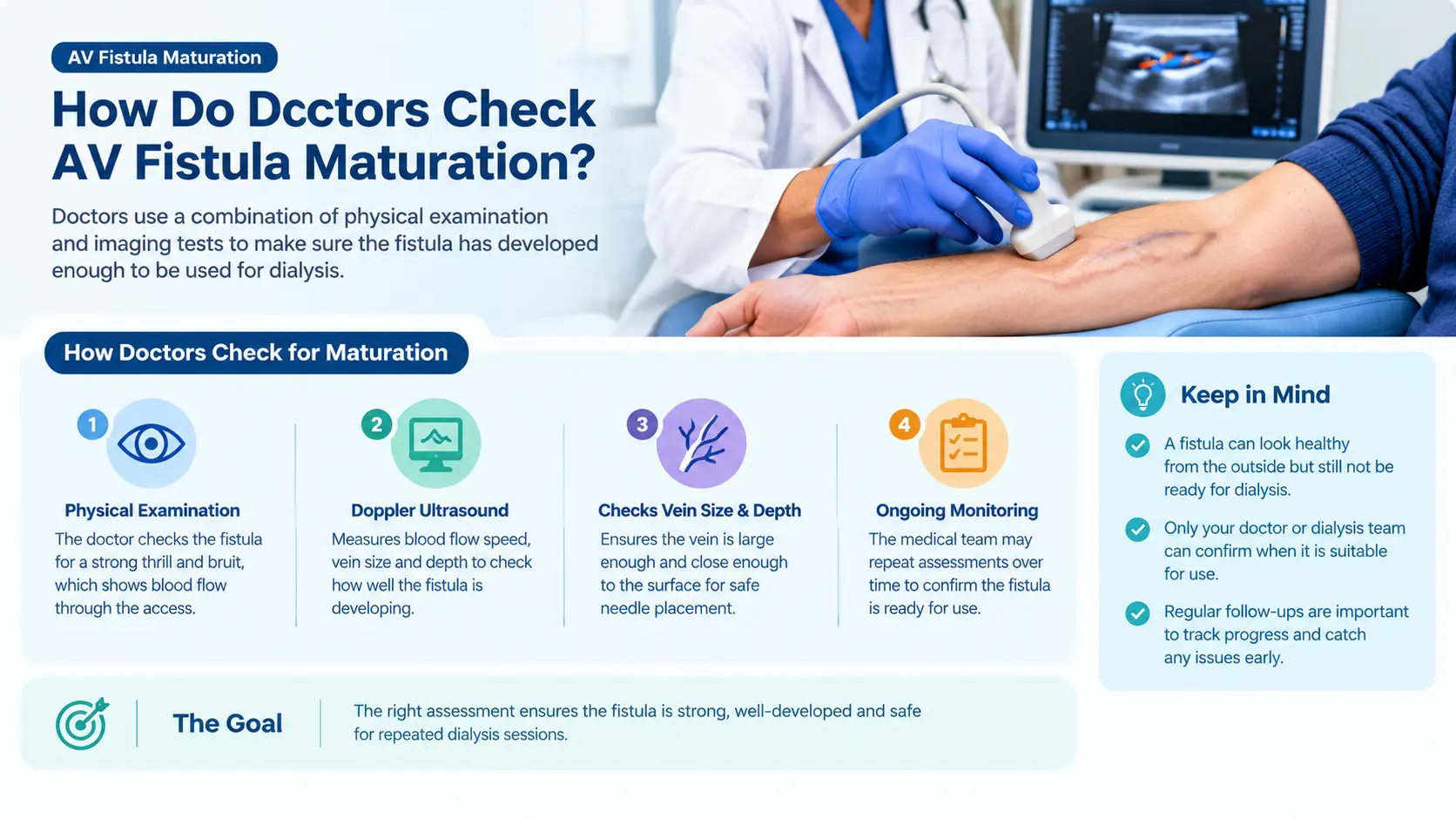
Doctors use a physical examination and, when necessary, imaging tests to assess AV fistula maturation.
Physical Examination
The medical team checks the fistula for signs that blood is flowing through it. One important sign is a vibration called athrill, which can usually be felt over a functioning fistula.
The doctor may also listen to blood flow using a stethoscope and assess the size, accessibility, and other physical characteristics of the vein.
Patients may be taught how to check for their usual thrill at home. However, self-checking does not replace medical follow-up.
Doppler Ultrasound
A Doppler ultrasound may be recommended if the fistula is not maturing as expected or if the physical examination raises concerns.
This test helps assess blood flow, vein diameter, and possible problems such as narrowing or blood flow being diverted through side branches. The results can help the specialist decide whether the fistula needs further monitoring or treatment.
Regular follow-up is important because some maturation problems can be identified and addressed before the fistula becomes unusable.
What Are the Signs That an AV Fistula Is Maturing?
A maturing fistula may show changes such as:
A vein that gradually becomes larger and more noticeable.
A palpable vibration, known as a thrill, over the fistula.
Blood flow that is considered adequate during clinical assessment.
A vein that becomes more accessible for dialysis needle placement.
These signs can be helpful, but they do not confirm readiness on their own. A healthcare professional must assess whether the fistula is suitable for dialysis.
What Are the Warning Signs of Delayed or Poor Maturation?
Not every AV fistula matures as expected. Some develop inadequate blood flow or other problems that prevent them from being used safely.
Contact your doctor or dialysis team if you notice:
The vibration over the fistula becomes weaker or disappears.
The fistula does not seem to be developing as expected.
New swelling or increasing discomfort develops around the access.
The hand becomes unusually cold, painful, numb, or weak.
The dialysis team reports difficulty using the fistula or obtaining adequate blood flow.
A sudden loss of the usual thrill may indicate a serious blood flow problem and needs urgent medical assessment. Severe pain, sudden hand coldness, or rapidly increasing swelling also requires prompt attention.
For more information about possible complications, read our guide onwhy an AV fistula fails and its warning signs.
What Happens If an AV Fistula Does Not Mature?
If an AV fistula is not developing properly, the next step is to identify the reason. Doctors may recommend a physical examination, Doppler ultrasound, or other investigations depending on the findings.
Treatment depends on the underlying problem. For example, a narrowed blood vessel may need a procedure to improve blood flow. In some cases, a side branch may need to be treated. Other patients may require a different approach based on their blood vessels and overall health.
A fistula that matures slowly does not always mean that it has permanently failed. Some problems can be corrected, allowing the access to become usable. However, early assessment is important because unnecessary delays may prolong the use of a temporary dialysis catheter.
Patients with delayed maturation should consult a vascular specialist experienced in dialysis access. Learn more aboutAV fistula treatment in Gurgaonto understand the available options for evaluating and managing fistula-related problems.
How Can You Care for Your AV Fistula After Surgery?
Following your medical team's instructions can help protect the fistula while it matures.
Check the thrill as instructed:Learn how to recognise your fistula's usual vibration and report any sudden change.
Keep the surgical area clean:Follow the wound care instructions provided by your healthcare team.
Avoid pressure on the access arm:Do not sleep with your body weight pressing on the fistula or wear tight clothing around it.
Protect the arm from injury:Avoid activities that put unnecessary pressure or strain on the access.
Follow exercise advice:Your surgeon may recommend specific hand or arm exercises when appropriate. Do not begin an exercise routine without guidance.
Attend follow-up appointments:These visits help your team check healing, blood flow, and maturation.
Follow instructions about blood pressure measurements and blood draws:Your care team can advise you how to protect the access arm.
Do not massage the fistula, apply pressure to it, or try to correct a suspected blockage yourself. If you notice a sudden change in blood flow or other warning signs, contact your medical team promptly.
Why Is Early Evaluation Important?
AV fistula maturation is not just about waiting for the vein to become larger. The access needs to develop enough blood flow and be suitable for repeated dialysis needle placement.
Early assessment helps doctors identify problems such as narrowing, inadequate blood flow, or side branches that may interfere with maturation. When a correctable problem is found, timely treatment may improve the chance of making the fistula usable.
Planning and follow-up are especially important for patients who may need dialysis soon. Your nephrologist, vascular surgeon, and dialysis team can work together to determine the right time to assess and use the fistula.
Conclusion
AV fistula maturation is an important step in preparing a patient for haemodialysis. Although many fistulas take around 6 to 8 weeks to mature, the time varies from person to person.
Regular follow-up, proper access care, and early evaluation of warning signs can help identify problems before they become more serious. If your fistula is not developing as expected, or you notice a change in its usual vibration, contact your medical team for advice.
For concerns about AV fistula maturation, delayed development, or dialysis access problems, consult a qualified vascular specialist who can assess your fistula and recommend the next steps based on your condition.