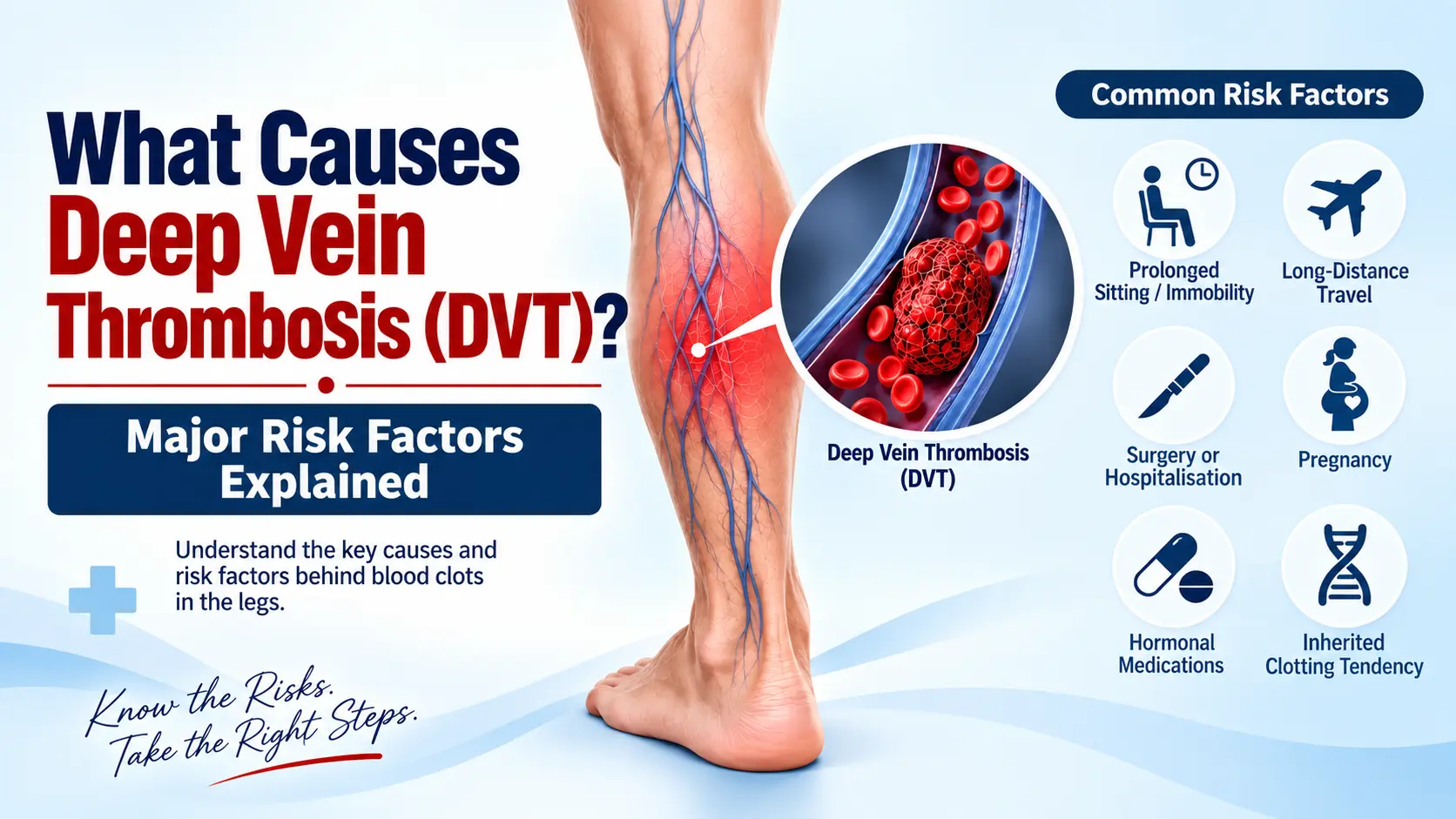
What Causes Deep Vein Thrombosis (DVT)? Major Risk Factors Explained
A deep vein thrombosis (DVT) develops when a blood clot forms inside a deep vein, most commonly in the leg. The causes are not always as simple as one single trigger. In many people, several factors may come together to increase the likelihood of clot formation.
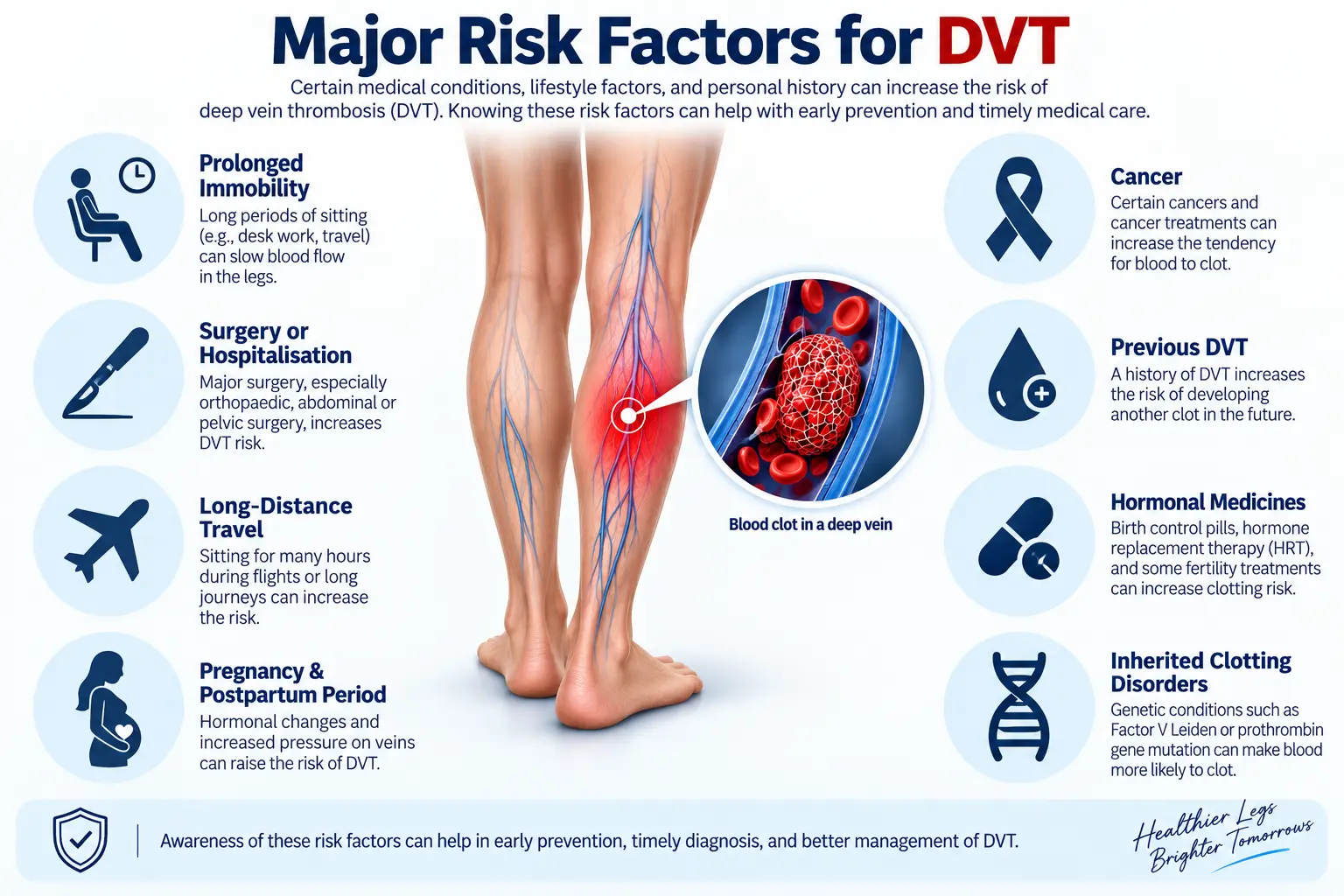
Understanding DVT causes can be particularly useful if you have recently undergone surgery, spent a long time sitting or in bed, experienced an injury, are pregnant, take oestrogen-containing medicines, or have a medical condition that affects clotting.
Importantly, having a risk factor does not mean that you will definitely develop DVT. Some people develop a clot without an obvious cause, while others may have several risk factors without ever experiencing one.
What Is DVT?
Deep vein thrombosis is a blood clot that forms in a deep vein. It most often affects the veins of the leg, particularly the calf or thigh.
A clot can interfere with normal blood flow through the affected vein. The concern becomes greater if part of the clot breaks away and travels through the bloodstream to the lungs, where it can cause a pulmonary embolism.
This is why understanding the factors that contribute to DVT matters, particularly for people going through periods of reduced mobility or other situations that increase clotting risk.
If you are concerned about symptoms that could represent a blood clot, it is useful to understand the difference between risk factors and symptoms . The website's existing guide on warning signs of a blood clot in the leg covers the symptoms in greater detail.
What Causes DVT?
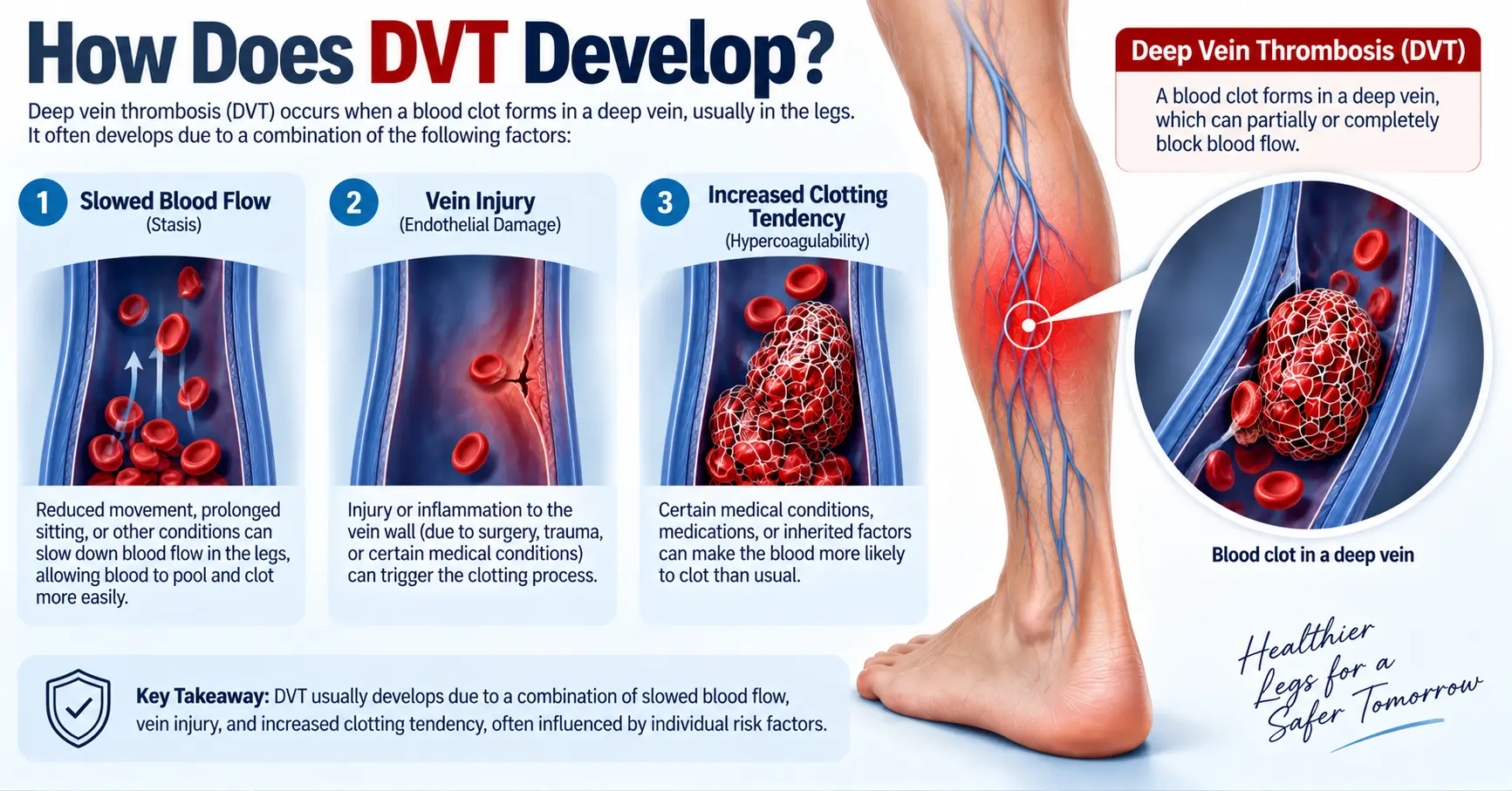
Doctors often explain the development of a blood clot using three broad factors: sluggish blood flow, injury to the blood vessel, and changes that make blood more likely to clot .
You do not need to have all three for a DVT to develop. Different risk factors can affect one or more of these processes.
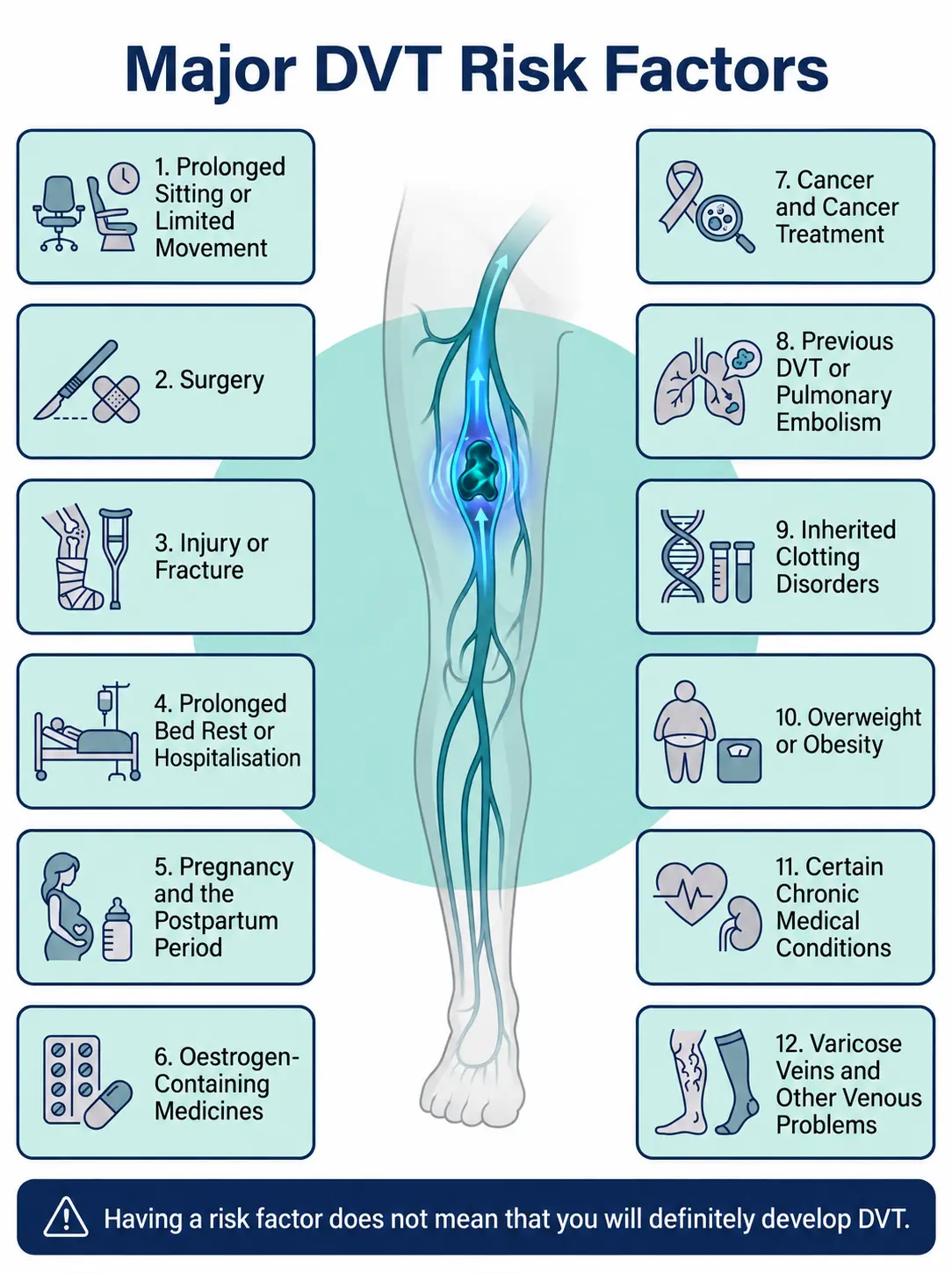
1. Prolonged Sitting or Limited Movement
One of the important causes of DVT is reduced movement.
When you walk and move your leg muscles, muscle contractions help push venous blood back towards the heart. When you remain still for long periods, blood flow through the veins can become slower.
This can happen during:
-
Long-distance travel
-
Prolonged sitting at work
-
Extended bed rest
-
Hospitalisation
-
Recovery after an operation
-
Wearing a cast or brace that limits movement
-
Paralysis or significant mobility problems
Long journeys do not automatically cause DVT. The risk depends on the duration of immobility and whether other risk factors are present.
2. Surgery
Recent surgery is an important DVT risk factor, particularly when the procedure is major or involves the abdomen, pelvis, hip or legs.
Surgery can increase clotting risk in several ways. The body naturally activates clotting mechanisms after tissue injury, while pain and recovery may reduce physical movement. Some operations can also involve direct injury to blood vessels.
The risk can remain elevated during the recovery period, which is why doctors assess individual patients for their risk of venous thromboembolism before and after major procedures.
3. Injury or Fracture
A serious injury can contribute to DVT risk, especially when it damages a blood vessel or significantly reduces mobility.
Fractures and severe muscle injuries may therefore be associated with an increased risk of blood clots. A leg injury can also lead to prolonged inactivity if walking becomes difficult.
The combination of vessel injury and reduced movement can make the environment more favourable for clot formation.
4. Prolonged Bed Rest or Hospitalisation
Being confined to bed for several days can slow blood flow through the deep veins.
This is particularly relevant when someone is recovering from surgery, serious illness, injury or another medical condition that prevents normal movement.
Hospitalisation it self does not mean a person will develop DVT, but immobility and certain underlying illnesses can increase the risk. Healthcare teams therefore consider individual clotting risk when deciding whether preventive measures are appropriate.
5. Pregnancy and the Postpartum Period
Pregnancy naturally changes the body's clotting system. These changes help reduce excessive bleeding during childbirth, but they also increase the tendency for blood to clot.
The risk can continue after delivery, particularly during the postpartum period.
Pregnancy-related DVT risk may be higher when additional factors are present, such as previous DVT, limited mobility, obesity or certain inherited clotting conditions.
6. Oestrogen-Containing Medicines
Oestrogen can increase the tendency of blood to clot in some people.
This means certain hormonal medicines can be relevant when assessing DVT risk, including:
-
Combined hormonal contraceptives
-
Some hormone replacement therapies
This does not mean that everyone taking these medicines will develop a blood clot. The overall risk depends on the person's individual circumstances and other risk factors.
7. Cancer and Cancer Treatment
Cancer is an established risk factor for venous blood clots.
Certain cancers and cancer treatments can affect the body's clotting system. Hospitalisation, surgery and reduced movement during treatment may add further risk.
For someone undergoing cancer treatment, the risk of DVT therefore needs to be considered alongside the type of cancer, treatment, mobility and other individual factors.
8. Previous DVT or Pulmonary Embolism
A previous blood clot is itself an important risk factor for another clot.
Someone who has experienced DVT or pulmonary embolism may therefore need individual assessment of their future risk, particularly during situations such as surgery, prolonged travel, pregnancy or periods of reduced mobility.
A previous DVT does not mean that another clot is inevitable. However, it is important information to tell your doctor when discussing your vascular or general medical history.
9. Inherited Clotting Disorders
Some people are born with conditions that make their blood more likely to clot. These are sometimes referred to as inherited thrombophilias.
A family history of DVT or pulmonary embolism can also provide an important clue when assessing a person's risk.
If several close family members have experienced unexplained or recurrent blood clots, a doctor may consider whether an underlying clotting tendency could be relevant.
10. Overweight or Obesity
Being overweight or living with obesity is associated with an increased risk of DVT.
The reasons are complex and may involve inflammation, changes in blood coagulation and reduced mobility. The risk can become more significant when obesity occurs alongside other factors such as surgery, prolonged inactivity or previous DVT.
Weight alone, however, cannot determine whether someone will develop a blood clot.
11. Certain Chronic Medical Conditions
Several long-term health conditions have been associated with an increased risk of DVT or pulmonary embolism.
These include conditions such as:
-
Heart disease
-
Lung disease
-
Inflammatory bowel disease
-
Cancer
-
Certain inflammatory conditions
The underlying condition, medications, mobility and other health factors all matter when assessing an individual's risk.
12. Varicose Veins and Other Venous Problems
Some venous conditions may be associated with an increased risk of thrombosis.
For example, the NHS lists varicose veins among factors associated with increased DVT risk.
Dr. Himanshu Verma's existing varicose veins treatment information also discusses venous disease and the relationship between varicose veins and blood-clot complications.
However, having varicose veins does not mean that a person will necessarily develop DVT. Persistent swelling, pain or other changes should be evaluated rather than assumed to be caused by varicose veins alone.
Can Sitting for Long Hours Cause a Blood Clot in the Leg?
Long periods of sitting can contribute to DVT risk because reduced leg movement can slow venous blood flow.
This is particularly relevant during long-distance travel, when a person may remain seated for several hours. However, travel-related DVT risk is generally influenced by both the duration of travel and the presence of other risk factors .
People who frequently sit for work should avoid remaining completely inactive for prolonged periods. Regular movement is generally beneficial for circulation, although people with specific medical conditions should follow their doctor's advice.
Does Dehydration Cause DVT?
Dehydration is sometimes discussed as a possible contributor to blood-clot risk, particularly during situations such as long travel or illness.
However, it should not be considered a standalone explanation for every DVT. The overall risk depends on the person's medical history and other factors such as immobility, surgery, cancer, pregnancy or previous thrombosis.
The NHS includes dehydration among situations associated with a higher chance of DVT.
Can DVT Happen Without an Obvious Cause?
Yes.
Sometimes doctors cannot identify a clear trigger for a DVT. This is sometimes described as an unprovoked DVT .
Not finding an obvious cause does not mean the clot is imaginary or that the person did something wrong. A number of biological and medical factors may contribute to clot formation, and not every factor can be identified through routine evaluation.
A medical assessment can help determine whether there are underlying conditions or circumstances that may have contributed to the clot.
When Do Multiple DVT Risk Factors Become More Important?
Risk factors can overlap.
For example, a person recovering from major surgery may also have limited mobility. Another person may have cancer while receiving treatment and spending significant time in bed. Someone travelling for several hours may also have a previous history of DVT or another clotting risk.
The CDC notes that the chance of DVT or pulmonary embolism can increase further when more than one risk factor is present.
This is why doctors do not usually assess one risk factor in isolation. Your age, medical history, medications, mobility, recent procedures and other circumstances all contribute to the overall picture.
What Should You Do If You Have DVT Risk Factors?
Having one or more risk factors does not mean you should assume that you have a blood clot.
However, if you develop symptoms that could indicate DVT, medical evaluation is important because symptoms alone cannot reliably confirm or exclude a clot.
The NHS notes that suspected DVT may require an ultrasound examination, while the CDC also emphasises that diagnosis requires medical testing rather than self-diagnosis.
If DVT is suspected, a doctor may assess your medical history, examine you and arrange appropriate testing based on your symptoms and risk profile. If a blood clot is confirmed, the appropriate deep vein thrombosis treatment can then be determined based on the location of the clot, its severity, and your individual medical needs.
How Can You Reduce Your Risk of DVT?
Not every DVT can be prevented, particularly when underlying medical conditions or unavoidable risk factors are involved.
Still, several general measures can support healthy circulation:
-
Stay physically active according to your health condition.
-
Avoid unnecessary prolonged periods of complete inactivity.
-
Follow medical advice after surgery or hospitalisation.
-
During long journeys, move your legs and walk around periodically when it is safe to do so.
-
Maintain a healthy weight where appropriate.
-
Tell your doctor about any previous DVT or family history of blood clots.
-
Discuss your individual clotting risk before major surgery or during pregnancy when relevant.
For long-distance travel, the CDC recommends getting up and walking around periodically and moving the feet and legs while seated.
Prevention advice should be personalised for people with a previous DVT, clotting disorder, cancer, recent surgery or other significant risk factors.
What Is the Difference Between a DVT Cause and a DVT Risk Factor?
These terms are often used interchangeably, but there is an important distinction.
A cause suggests a direct reason something happened. A risk factor is something that increases the likelihood of an event occurring.
For DVT, many of the factors discussed above are better understood as risk factors rather than guaranteed causes .
For example, prolonged immobility can increase the risk of clot formation, but not every person who sits for a long time develops DVT. Similarly, having varicose veins or being pregnant does not mean a blood clot will definitely occur.
This distinction is important because DVT usually results from a combination of biological, medical and situational factors rather than one simple cause.
When Should You Seek Medical Attention?
If you have risk factors for DVT and develop new swelling, pain, warmth or skin changes in one leg, seek medical evaluation rather than trying to determine the cause yourself.
DVT can sometimes lead to pulmonary embolism. If symptoms such as sudden breathlessness or chest pain occur, urgent medical attention is required because these can be signs of a pulmonary embolism.
Book a Consultation with Dr. Himanshu Verma
If you have risk factors for deep vein thrombosis or are experiencing new swelling, pain, warmth, or other concerning changes in one leg, do not ignore them. Dr. Himanshu Verma , a Vascular & Endovascular Surgeon at Fortis Memorial Research Centre, Gurugram, provides evaluation and treatment for vascular conditions including deep vein thrombosis (DVT).
Patients from Gurgaon, Delhi NCR, Noida, Faridabad, and nearby areas can seek specialist evaluation for suspected blood clots and other vascular concerns. The appropriate assessment and treatment plan depends on the individual's symptoms, medical history, risk factors, and test results.
Call:
+91 88268 33598
Email:
varenyamvascular@gmail.com
Visit:
Fortis Memorial Research Centre, Opposite HUDA City Centre, Sector 44, Gurugram, Haryana 122003
If you are concerned about DVT or have relevant risk factors, timely medical evaluation can help determine the appropriate next step.